América Latina vuelve al tablero: por qué Estados Unidos volvió a pensar la región como prioridad
Latin America Returns to the Board: Why the United States Has Once Again Made the Region a Priority
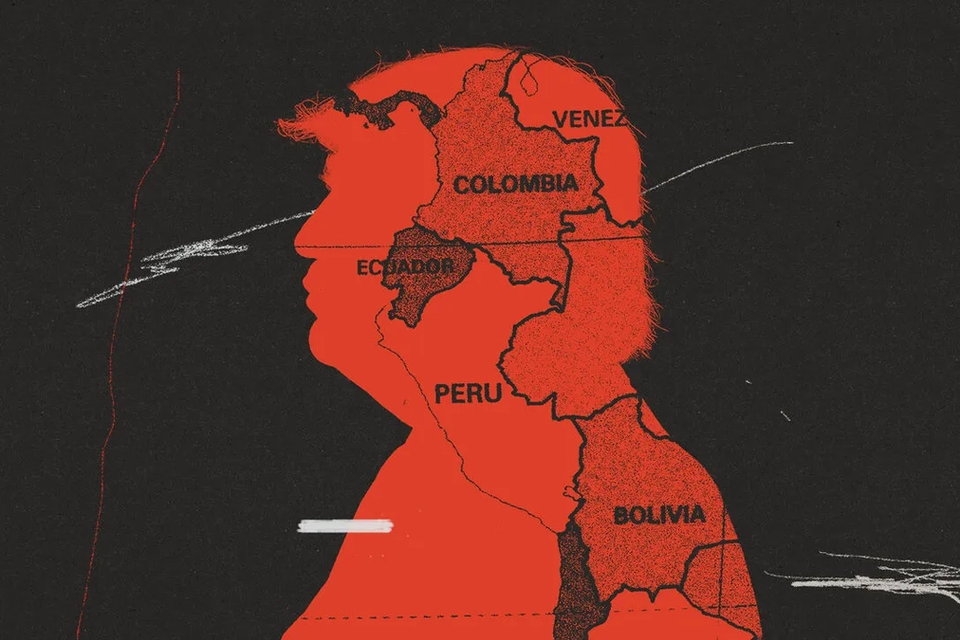

La creciente influencia de China y un escenario regional cada vez más fragmentado devolvieron a América Latina al centro de la estrategia estadounidense. El regreso de Washington a la región abre un interrogante: ¿estamos frente a una nueva política exterior o ante la recuperación de una lógica histórica de poder hemisférico?
China's growing influence and an increasingly fragmented regional landscape have returned Latin America to the center of U.S. strategy. Washington's return to the region raises a question: are we facing a new foreign policy or the recovery of a historical logic of hemispheric power?
Durante años, América Latina ocupó un lugar secundario en la política exterior estadounidense. La atención de Washington estuvo concentrada en Medio Oriente, la competencia con Rusia y, más recientemente, el Indo-Pacífico. Sin embargo, en los primeros meses del segundo mandato de Donald Trump la región volvió a adquirir una importancia que parecía haber perdido. El lanzamiento del Escudo de las Américas, la referencia explícita a la Doctrina Monroe en la nueva Estrategia de Seguridad Nacional y una política más activa hacia el hemisferio reflejan un cambio de prioridades que trasciende la coyuntura.
Los acontecimientos de las últimas semanas muestran que el reordenamiento de las prioridades estadounidenses comenzó a traducirse en hechos concretos. Mientras Brasil rechazó el ingreso de funcionarios estadounidenses que pretendían evaluar el funcionamiento de su sistema electoral antes de las elecciones de octubre, el nuevo gobierno de Keiko Fujimori en Perú profundizó su acercamiento con Washington y manifestó su intención de incorporarse al Escudo de las Américas. En la misma línea, el presidente electo de Colombia, Abelardo de la Espriella, también expresó su voluntad de adherir a la iniciativa. De esta forma podemos observar que mientras algunos gobiernos profundizan su alineamiento con Estados Unidos, otros buscan preservar mayores márgenes de autonomía frente a Washington. Esa diversidad de posiciones refleja una América Latina políticamente fragmentada, donde ya no existe una única respuesta frente a la estrategia estadounidense.
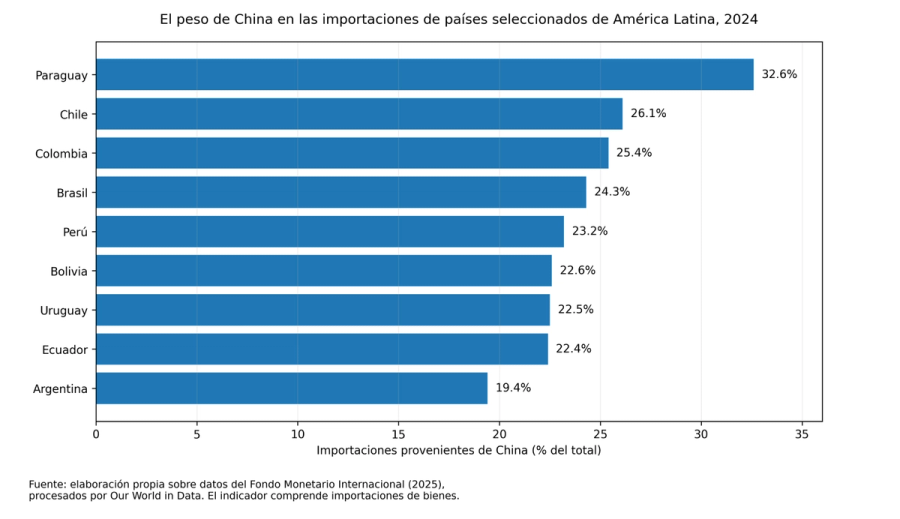
El renovado interés de Estados Unidos por América Latina, sin embargo, no puede explicarse únicamente por el regreso de Trump a la Casa Blanca. Durante las últimas dos décadas, China amplió de manera sostenida su presencia económica, comercial y tecnológica en América Latina. En 2024, el intercambio comercial entre ambas partes superó los 518.000 millones de dólares y Beijing consolidó inversiones en infraestructura, energía y minerales críticos, además de incorporar a numerosos países latinoamericanos a la Iniciativa de la Franja y la Ruta. Para varios gobiernos de la región, China dejó de ser un socio complementario para convertirse en un actor económico central. Este avance no solo modificó los flujos comerciales de la región. También incrementó la presencia china en sectores considerados estratégicos por Washington, como los puertos, las telecomunicaciones, la infraestructura energética y la extracción de minerales críticos. En consecuencia, América Latina dejó de ser vista únicamente como un espacio de cooperación económica para volver a ser concebida como un escenario de competencia entre grandes potencias.
Ese nuevo escenario geopolítico también ha tenido incidencia en la transformación de la estrategia de Estados Unidos hacia la región. El Escudo de las Américas, presentado como una coalición destinada a combatir el crimen organizado, el narcotráfico y la inmigración irregular, trasciende sus objetivos declarados y forma parte de una estrategia más amplia para reforzar el liderazgo estadounidense en el hemisferio. Como plantea un reciente análisis publicado en Nueva Sociedad, la región funciona hoy como un "laboratorio de control", donde Estados Unidos busca ensayar nuevas formas de proyectar poder y reconstruir su capacidad de influencia en un contexto de creciente competencia con China. Aunque el discurso oficial pone el foco en la cooperación en materia de seguridad, el momento en que surge la iniciativa y los países que busca incorporar sugieren un objetivo más amplio: fortalecer alianzas políticas, consolidar la presencia estadounidense y limitar el margen de acción de actores externos en la región. No resulta casual que la propia Estrategia de Seguridad Nacional anuncie un "Corolario Trump" de la Doctrina Monroe orientado a restringir la influencia de actores externos en el hemisferio.
Más que inaugurar una política exterior completamente nueva, la administración Trump parece recuperar una tradición histórica de la relación de Estados Unidos con América Latina. La reivindicación de figuras como William McKinley y la apelación explícita a la Doctrina Monroe muestran que Washington vuelve a concebir al hemisferio occidental como un espacio prioritario para proyectar poder y preservar su influencia. La diferencia es que esa lógica reaparece en un escenario muy distinto al del siglo XIX o al de la Guerra Fría: una América Latina más fragmentada políticamente, una China con una presencia sin precedentes y un orden internacional crecientemente multipolar.
El retorno de una lógica hemisférica
El regreso de América Latina a la agenda estadounidense no responde únicamente a un cambio de liderazgo en la Casa Blanca. También refleja una transformación más profunda del sistema internacional, donde la competencia entre Estados Unidos y China volvió a otorgarle al hemisferio occidental un valor geopolítico central. Más que una ruptura, la estrategia de Trump recupera una lógica histórica de la política exterior estadounidense, aunque adaptada a un escenario mucho más complejo que el de la Guerra Fría. El desafío será determinar hasta qué punto esa estrategia logra reconstruir la influencia de Washington en una región que hoy dispone de más socios, más opciones y mayores márgenes de autonomía que hace apenas dos décadas.
For years, Latin America occupied a secondary position in U.S. foreign policy. Washington's attention was focused on the Middle East, competition with Russia, and, more recently, the Indo-Pacific. However, in the early months of Donald Trump's second term, the region regained an importance it seemed to have lost. The launch of the Shield of the Americas, the explicit reference to the Monroe Doctrine in the new National Security Strategy, and a more active policy toward the hemisphere reflect a shift in priorities that transcends short-term circumstances.
The events of recent weeks show that the realignment of U.S. priorities has begun to translate into concrete actions. While Brazil denied entry to U.S. officials who intended to assess the functioning of its electoral system prior to the October elections, the new government of Keiko Fujimori in Peru deepened its rapprochement with Washington and expressed its intention to join the Shield of the Americas. Along the same lines, Colombia's president-elect, Abelardo de la Espriella, also expressed his willingness to join the initiative. We can thus see that while some governments deepen their alignment with the United States, others seek to preserve greater margins of autonomy from Washington. This diversity of positions reflects a politically fragmented Latin America, where a single response to U.S. strategy no longer exists.
The renewed interest of the United States in Latin America, however, cannot be explained solely by Trump's return to the White House. Over the past two decades, China steadily expanded its economic, commercial, and technological presence in Latin America. In 2024, bilateral trade exceeded $518 billion, and Beijing consolidated investments in infrastructure, energy, and critical minerals, while also incorporating numerous Latin American countries into the Belt and Road Initiative. For several governments in the region, China ceased to be a complementary partner and became a central economic actor. This advance not only altered regional trade flows; it also increased the Chinese presence in sectors considered strategic by Washington, such as ports, telecommunications, energy infrastructure, and critical mineral extraction. Consequently, Latin America is no longer viewed merely as a space for economic cooperation, but once again as an arena of competition between major powers.
This new geopolitical landscape has also influenced the transformation of U.S. strategy toward the region. The Shield of the Americas, presented as a coalition designed to combat organized crime, drug trafficking, and irregular immigration, transcends its declared objectives and forms part of a broader strategy to reinforce U.S. leadership in the hemisphere. As a recent analysis published in Nueva Sociedad argues, the region today functions as a "laboratory of control", where the United States seeks to test new ways of projecting power and rebuilding its influence amid growing competition with China. Although official discourse focuses on security cooperation, the timing of the initiative and the countries it seeks to include suggest a broader goal: strengthening political alliances, consolidating the U.S. presence, and limiting the room for maneuver of external actors in the region. It is no coincidence that the National Security Strategy itself announces a "Trump Corollary" to the Monroe Doctrine aimed at restricting the influence of external actors in the hemisphere.
Rather than inaugurating a completely new foreign policy, the Trump administration appears to be reviving a historical tradition in U.S. relations with Latin America. The invocation of figures like William McKinley and the explicit appeal to the Monroe Doctrine show that Washington once again conceives the Western Hemisphere as a priority space to project power and preserve its influence. The difference is that this logic resurfaces in a setting very different from that of the 19th century or the Cold War: a more politically fragmented Latin America, an unprecedented Chinese presence, and an increasingly multipolar international order.
The Return of a Hemispheric Logic
Latin America's return to the U.S. agenda is not merely the result of a change of leadership in the White House. It also reflects a deeper transformation in the international system, where competition between the United States and China has once again conferred central geopolitical value on the Western Hemisphere. Far from a rupture, Trump's strategy revives a historical logic of U.S. foreign policy, albeit adapted to a much more complex landscape than that of the Cold War. The challenge will be to determine to what extent this strategy succeeds in rebuilding Washington's influence in a region that today possesses more partners, more options, and greater margins of autonomy than it did two decades ago.
Artículos relacionados
Related articles

¿Cómo financiamos una América Latina sostenible?
How could we finance a sustainable Latin America?
Paradiplomacia y nuevas formas de inserción internacional en Argentina
Paradiplomacy and new forms of international insertion in Argentina