Atlántico Sur, una disputa geopolítica y el futuro de la Argentina
The South Atlantic: A Geopolitical Dispute and the Future of Argentina
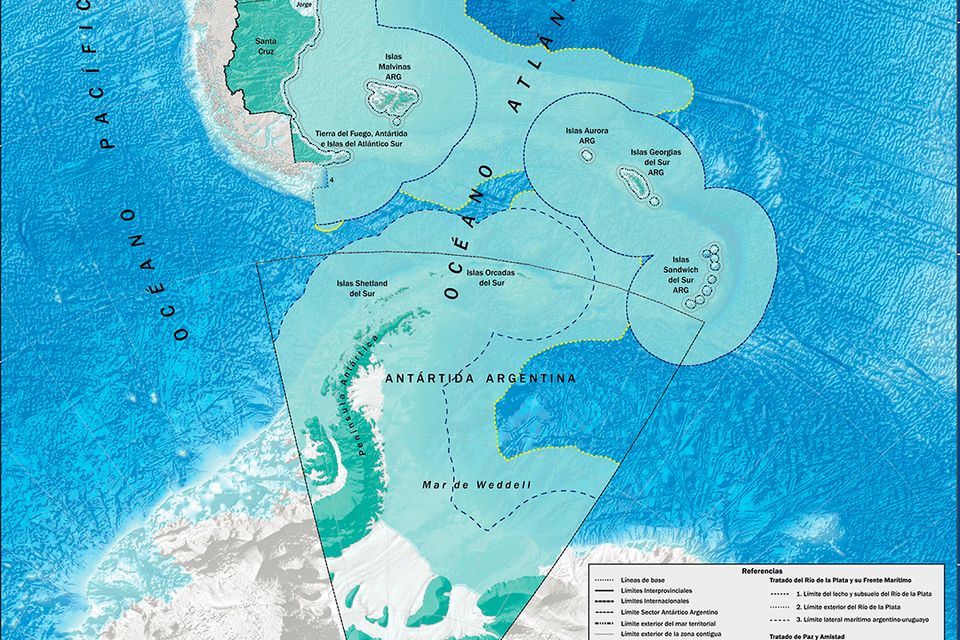

En las últimas décadas, el Atlántico Sur ha adquirido una relevancia geopolítica cada vez mayor, impulsada por su abundancia de recursos naturales, su biodiversidad y, especialmente, su proyección hacia la Antártida. Frente al avance de China en la región, Argentina empieza a perfilarse como un socio estratégico para Washington. La cuestión central es qué implicancias tendrá este escenario para el país.
In recent decades, the South Atlantic has acquired an increasingly greater geopolitical relevance, driven by its abundance of natural resources, its biodiversity, and, especially, its projection toward Antarctica. Faced with China's advance in the region, Argentina is beginning to emerge as a strategic partner for Washington. The central question is what implications this scenario will have for the country.
El Atlántico Sur ha sido un área de gran importancia histórica. Esto se debe a su posicionamiento estratégico, el cual facilita el acceso tanto a recursos marítimos extremadamente valiosos como a muchas de las principales rutas comerciales de la región. En las últimas décadas, en el marco de la transición energética y la escasez de recursos naturales, su relevancia ha aumentado notoriamente. El descubrimiento de yacimientos petrolíferos y minerales, la rica biodiversidad marina y su papel en la proyección hacia la Antártida constituyen factores determinantes en este proceso de transición, en el que el Atlántico Sur adquiere una centralidad creciente en el escenario global.
De este modo, el Atlántico Sur se ha convertido en una arena de disputa entre las principales potencias en búsqueda de predominio global. Entre ellas se encuentra Estados Unidos, que ha manifestado un creciente interés en la región frente a la expansión de la influencia china. En este contexto, debido a su cercanía geográfica y su renovada disposición a alinearse estrechamente con Occidente, Argentina emerge como un aliado estratégico.
El rol de China en la región
En las últimas décadas, China ha desarrollado un interés estratégico en el Atlántico Sur, motivado principalmente por el acceso a recursos naturales y la proyección hacia la Antártida. En este marco, el gigante asiático ha destinado considerables recursos a la construcción de instalaciones en el continente blanco (actualmente cuenta con cinco) e incluso ha firmado un acuerdo de cooperación en materia antártica con la Argentina.
Estas acciones se inscriben en una estrategia más amplia de proyección de influencia en países en desarrollo, impulsada a través de su Iniciativa de la Franja y la Ruta. América Latina se encuentra incluida en la extensión geográfica del proyecto. Esto ha derivado en inversiones chinas en infraestructura, especialmente en el ámbito portuario, así como en telecomunicaciones y en el sector energético.
Intereses de Argentina en el Atlántico Sur
Para Argentina, el Atlántico Sur es una región fundamental para la defensa de sus intereses nacionales. Implica cuestiones de soberanía, desarrollo económico y seguridad. La plataforma continental argentina, que duplica en extensión su territorio continental, alberga recursos hidrocarburíferos y pesqueros de gran valor. Su exploración y explotación representan una oportunidad para el desarrollo energético y económico del país.
Sin embargo, la presencia de fuerzas externas ha aumentado, atentando contra la soberanía argentina. La pesca ilegal, no declarada y no reglamentada, llevada a cabo en gran parte por flotas pesqueras de origen chino, y la presencia militar británica en las islas Malvinas, Georgias del Sur y Sándwich del Sur, constituyen las principales amenazas. Argentina, en respuesta, procura reforzar su capacidad de control y vigilancia de sus vastas extensiones marítimas, con el objetivo de resguardar su soberanía y garantizar la seguridad nacional.
Intereses de Estados Unidos en el Atlántico Sur
En el caso estadounidense, sus intereses en el Atlántico sur se ven principalmente determinados por la creciente presencia china. La batalla por el predominio en la región se ve enmarcada dentro de una disputa mayor entre ambas potencias por la hegemonía mundial. Ante este escenario, Estados Unidos ha buscado incrementar su participación en el Atlántico Sur, ya sea individualmente o a través de la OTAN.
Particularmente, la fuerte presencia de Gran Bretaña en el área, uno de sus principales aliados, supone una ventaja estratégica para contrarrestar la influencia china. El alineamiento de Argentina con Occidente refuerza esta posición, facilitando la cooperación en defensa y seguridad marítima.
¿Una relación de cooperación?
Frente al giro político durante la presidencia de Javier Milei orientado hacia Occidente, Estados Unidos encuentra en la Argentina un aliado estratégico. Su ubicación geoestratégica y su gran plataforma continental, la convierte en un protagonista en el Atlántico Sur. Por ello, una relación amistosa y cercana con Argentina implicaría para Estados Unidos una ventaja comparativa por sobre China.
En el caso argentino, mantener afinidad con Occidente le resulta beneficioso sobre todo en materia de seguridad y defensa. Esta cercanía se traduce en la transferencia de tecnología y equipamiento militar, ejercicios conjuntos y apoyo financiero. Asimismo, una sólida relación con Washington puede ofrecer respaldo para futuras negociaciones bilaterales con el Reino Unido, fundamentalmente en torno a la cuestión de las Islas Malvinas.
The South Atlantic has been an area of great historical importance. This is due to its strategic positioning, which facilitates access to extremely valuable maritime resources as well as many of the main trade routes in the region. In recent decades, within the framework of the energy transition and the scarcity of natural resources, its relevance has notoriously increased. The discovery of oil and mineral deposits, the rich marine biodiversity, and its role in projecting toward Antarctica constitute determining factors in this transition process, in which the South Atlantic acquires a growing centrality on the global stage.
In this way, the South Atlantic has become an arena of dispute among the major powers in search of global dominance. Among them is the United States, which has manifested a growing interest in the region in the face of the expansion of Chinese influence. In this context, due to its geographical proximity and its renewed willingness to align itself closely with the West, Argentina emerges as a strategic ally.
China's Role in the Region
In recent decades, China has developed a strategic interest in the South Atlantic, motivated mainly by access to natural resources and projection toward Antarctica. Within this framework, the Asian giant has allocated considerable resources to the construction of facilities on the white continent (currently possessing five) and has even signed an Antarctic cooperation agreement with Argentina.
These actions are part of a broader strategy of projecting influence in developing countries, driven through its Belt and Road Initiative. Latin America is included in the project's geographical extension. This has resulted in Chinese investments in infrastructure, especially in the port sector, as well as in telecommunications and the energy sector.
Argentina's Interests in the South Atlantic
For Argentina, the South Atlantic is a fundamental region for the defense of its national interests. It involves matters of sovereignty, economic development, and security. The Argentine continental shelf, which doubles the extension of its continental territory, hosts highly valuable hydrocarbon and fishing resources. Their exploration and exploitation represent an opportunity for the country's energetic and economic development.
However, the presence of external forces has increased, threatening Argentine sovereignty. Illegal, unreported, and unregulated fishing, carried out largely by fishing fleets of Chinese origin, and the British military presence in the Malvinas, South Georgia, and South Sandwich Islands, constitute the main threats. Argentina, in response, seeks to reinforce its capacity to control and monitor its vast maritime expanses, with the goal of safeguarding its sovereignty and guaranteeing national security.
United States' Interests in the South Atlantic
In the case of the United States, its interests in the South Atlantic are primarily determined by the growing Chinese presence. The battle for dominance in the region is framed within a larger dispute between both powers for global hegemony. Faced with this scenario, the United States has sought to increase its participation in the South Atlantic, either individually or through NATO.
Particularly, the strong presence of Great Britain in the area, one of its main allies, represents a strategic advantage to counter Chinese influence. Argentina's alignment with the West reinforces this position, facilitating cooperation in defense and maritime security.
A Cooperative Relationship?
In the face of the political shift during Javier Milei's presidency oriented toward the West, the United States finds a strategic ally in Argentina. Its geostrategic location and its vast continental shelf make it a protagonist in the South Atlantic. Therefore, a friendly and close relationship with Argentina would imply a comparative advantage for the United States over China.
In the Argentine case, maintaining affinity with the West is beneficial to it, especially regarding security and defense. This proximity translates into the transfer of technology and military equipment, joint exercises, and financial support. Likewise, a solid relationship with Washington can offer backing for future bilateral negotiations with the United Kingdom, fundamentally surrounding the issue of the Malvinas Islands.
Artículos relacionados
Related articles
América Latina vuelve al tablero: por qué Estados Unidos volvió a pensar la región como prioridad
Latin America Returns to the Board: Why the United States Has Once Again Made the Region a Priority

¿Cómo financiamos una América Latina sostenible?
How could we finance a sustainable Latin America?