Cachemira: el conflicto entre India y Pakistán
Kashmir: the conflict between India and Pakistan
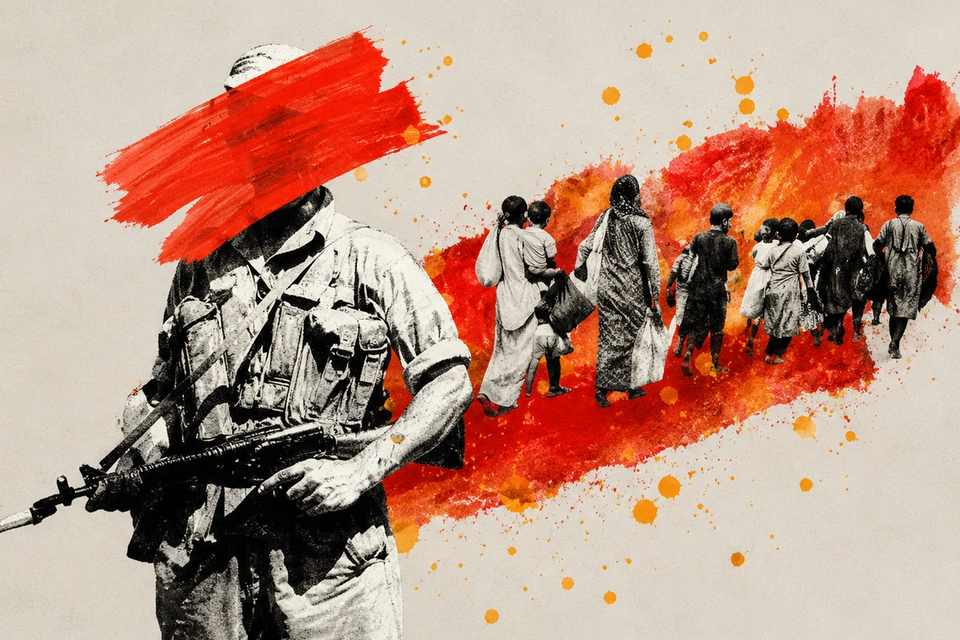
Cachemira concentra tensiones históricas, identitarias y geopolíticas que involucran a tres potencias nucleares: India, Pakistán y China. Victoria Farina explora el origen del conflicto, el valor estratégico del territorio por su ubicación y sus recursos hídricos, y cómo el cambio climático agrava un delicado equilibrio. Un análisis sobre por qué Cachemira sigue siendo uno de los puntos más peligrosos del mundo y cómo la cooperación climática podría ser clave para evitar una escalada.
Kashmir concentrates historical, identity, and geopolitical tensions that involve three nuclear powers: India, Pakistan, and China. Victoria Farina explores the origin of the conflict, the strategic value of the territory due to its location and water resources, and how climate change aggravates a delicate balance. An analysis of why Kashmir remains one of the most dangerous points in the world and how climate cooperation could be key to avoiding an escalation.
Amenaza del cambio climático
En 1960, India y Pakistán firmaron el Tratado de Aguas del Indo, que regula el reparto del agua de los principales ríos que atraviesan ambos países. Sin embargo, este acuerdo enfrenta desafíos debido a los efectos del cambio climático en la cuenca del Indo, especialmente en la región del Himalaya. Se han alterado los patrones de precipitación y el comportamiento de los glaciares que alimentan los ríos, generando que las bases del tratado queden desactualizadas, ya que la variabilidad en los caudales complica su gestión tradicional.
Numerosos expertos proponen actualizar el tratado incorporando el intercambio de datos sobre caudales, glaciares y calidad del agua, además de establecer revisiones periódicas que permitan adaptarse a las nuevas condiciones climáticas. Estas recomendaciones cobran aún más urgencia luego de que India suspendiera su aplicación práctica durante la última escalada de tensiones. El riesgo de un conflicto por el agua entre dos potencias nucleares subraya la necesidad de modernizar el acuerdo y fomentar la cooperación basada en la ciencia, para evitar crisis mayores en el futuro.
Historical roots
The conflict between India and Pakistan has its origins in their respective independence (1947) and the rise of the People's Republic of China (1949). After the dissolution of the British Empire, India had a Hindu majority concentrated in the south, center, and north, while the Muslim population was located mainly in the northwest and northeast, along with other ethnic minorities. This religious distribution led to the partition of the territory into two States: India, with a Hindu majority, and Pakistan, with a Muslim majority.
The case of Kashmir presented great complexity due to its socio-political context: it was a Muslim-majority territory governed by a Hindu leader, Hari Singh. That same year, Pakistan supported tribal groups that attempted to take control of the region by force. Faced with this situation, the governor of the principality of Jammu and Kashmir signed an "Instrument of Accession" in October, through which he requested military support and accession to India. This episode triggered the first Indo-Pakistani War (1947-49).
UN intervention allowed for a ceasefire to be reached and established a Line of Control that divided the territory: 55% remained under Indian administration, 35% for Pakistan, and 10% for China. However, the conflict did not end there. In the following decades, India and Pakistan clashed in three more wars.
More recently, in April 2025, an attack in Kashmir left several dead. India blamed Pakistan for harboring the militants involved, but Pakistan denied any participation. India responded by downgrading diplomatic relations and closing its borders, to which Pakistan replied with similar measures. Despite several days of escalation, a ceasefire was achieved in May through U.S. mediation.
Strategic value
The geopolitical importance of Kashmir lies in its strategic location between India, Pakistan, and China, at the crossroads of South Asia, Central Asia, and the Middle East. This makes it a key point for terrestrial and maritime trade corridors. Furthermore, it is fundamental for its water resources, given that several rivers originate there, such as the Indus, which are vital for the food, health, and energy security of India and Pakistan.
For India, the region symbolizes its commitment to secular identity and territorial integrity, in addition to opening the possibility of greater land access to Central Asia and Europe. For Pakistan, it is part of its narrative as a Muslim-majority State and is essential for the China-Pakistan Economic Corridor (CPEC). For its part, China, although not a direct actor in the conflict, watches the stability of the region closely as it affects some of its key interests.
Consequently, Kashmir has become one of the most militarized regions in the world, making it a space of permanent risk.
Climate change threat
In 1960, India and Pakistan signed the Indus Waters Treaty, which regulates the sharing of water from the main rivers that flow through both countries. However, this agreement faces challenges due to the effects of climate change on the Indus basin, especially in the Himalayan region. Precipitation patterns and the behavior of the glaciers that feed the rivers have been altered, rendering the foundations of the treaty outdated, as the variability in river flows complicates its traditional management.
Numerous experts propose updating the treaty by incorporating the exchange of data on river flows, glaciers, and water quality, in addition to establishing periodic reviews that allow for adaptation to new climate conditions. These recommendations become even more urgent after India suspended its practical application during the last escalation of tensions. The risk of a water conflict between two nuclear powers underscores the need to modernize the agreement and foster science-based cooperation to avoid major crises in the future.
Artículos relacionados
Related articles
América Latina vuelve al tablero: por qué Estados Unidos volvió a pensar la región como prioridad
Latin America Returns to the Board: Why the United States Has Once Again Made the Region a Priority

¿Cómo financiamos una América Latina sostenible?
How could we finance a sustainable Latin America?