Camboya–Tailandia: un conflicto regional con impacto global
Cambodia–Thailand: A Regional Conflict with Global Impact

El conflicto fronterizo entre Camboya y Tailandia va más allá de una disputa bilateral. Este suceso refleja tensiones geopolíticas, económicas y culturales, y ha convertido el patrimonio religioso en un símbolo utilizado por ambos gobiernos para reforzar discursos nacionalistas. La reciente escalada militar genera preocupación internacional, movilizando a actores como la Asociación de Naciones del Sudeste Asiático (ASEAN), China, Estados Unidos y la Organización de las Naciones Unidas, al mismo tiempo que evidencia la necesidad de fortalecer mecanismos multilaterales de resolución pacífica.
The border conflict between Cambodia and Thailand goes far beyond a bilateral dispute. This event reflects geopolitical, economic, and cultural tensions, and has turned religious heritage into a symbol used by both governments to reinforce nationalist discourses. The recent military escalation generates international concern, mobilizing actors such as the Association of Southeast Asian Nations (ASEAN), China, the United States, and the United Nations, while highlighting the need to strengthen multilateral mechanisms for peaceful resolution.
Camboya y Tailandia mantienen desde hace décadas una disputa territorial. Este conflicto comprende varios tramos sin demarcar a lo largo de más de 800 km de frontera terrestre que comparten. En el centro de la controversia se encuentran los antiguos templos hindúes Ta Moan Thom y Preah Vihear, este último declarado Patrimonio de la Humanidad por la Organización de las Naciones Unidas para la Educación, la Ciencia y la Cultura en 2008.
A partir de esta decisión, la situación se tornó abiertamente hostil, ya que Tailandia respondió con fuertes reclamos. La controversia se resolvió parcialmente en 2013, cuando la Corte Internacional de Justicia falló a favor de Camboya, reconociendo su soberanía sobre el templo. Aunque ese fallo logró reducir las fricciones durante varios años, el asesinato de un soldado camboyano en una reciente confrontación fronteriza reactivó el conflicto y volvió a tensar las relaciones bilaterales.
El conflicto trasciende a una cuestión de soberanía territorial e involucra dimensiones geopolíticas, económicas y culturales. Desde una perspectiva geopolítica, la región es estratégica por su ubicación clave en la Península Indochina y su acceso a rutas comerciales. Asimismo, la frontera disputada también es un punto sensible para potencias globales como China y Estados Unidos, que buscan ampliar su presencia e influencia en la ASEAN, elevando así la importancia internacional del conflicto.
Económicamente, la zona fronteriza posee abundantes recursos naturales, incluidos bosques, agua y potenciales depósitos energéticos de petróleo y gas. Asimismo, el turismo asociado a los templos, especialmente el Preah Vihear, representa una fuente económica importante que se ve amenazada por la inestabilidad. Esta combinación de intereses económicos y territoriales refuerza la necesidad de garantizar tanto la seguridad como el desarrollo de la región.
Por último, y a nivel cultural, los templos en disputa representan un legado del antiguo Imperio Jemer y poseen un profundo valor identitario tanto para Camboya como para Tailandia. Aunque hoy en día ambos países son mayoritariamente budistas, comparten raíces hinduistas que han sido utilizadas en discursos nacionalistas para reforzar identidades colectivas y justificar reclamos históricos. Esta dimensión simbólica añade complejidad al conflicto, dificultando la posibilidad de alcanzar una solución diplomática sostenible.
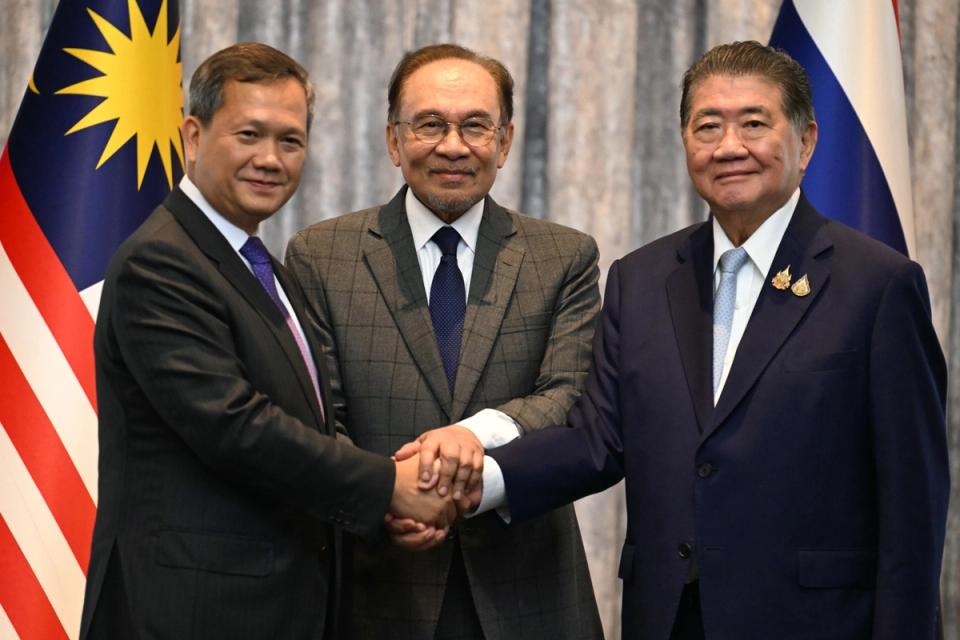
En este contexto, el primer ministro camboyano, Hun Manet, afirmó: “Camboya siempre ha mantenido una posición de resolución pacífica de los problemas, pero en este caso, no tenemos más opción que responder con la fuerza armada contra la agresión armada.” Por su parte, el portavoz del Ministerio de Asuntos Exteriores de Tailandia, Nikirndej Balankura, sostuvo que “la situación debe resolverse por medios bilaterales; no hace falta aún recurrir a terceros”.
Cuando la historia se convierte en arma, la paz se vuelve el mayor desafío.
El conflicto entre Camboya y Tailandia demuestra cómo un problema territorial puede convertirse en un desafío complejo con dimensiones históricas, culturales, económicas y geopolíticas. La utilización de símbolos religiosos en discursos nacionalistas agrava las tensiones existentes, pese a que ambos Estados afirman buscar una solución pacífica. La reciente escalada bélica pone en riesgo la estabilidad regional y expone la fragilidad del orden internacional. Por ello, es crucial fortalecer los mecanismos de diálogo para alcanzar una solución duradera que evite futuras crisis y promueva la paz en la región y estabilidad en el sistema.
Cambodia and Thailand have maintained a territorial dispute for decades. This conflict comprises several undemarcated stretches along the more than 800 km of land border they share. At the center of the controversy lie the ancient Hindu temples of Ta Moan Thom and Preah Vihear, the latter declared a World Heritage Site by the United Nations Educational, Scientific and Cultural Organization in 2008.
Following this decision, the situation turned openly hostile, as Thailand responded with strong claims. The controversy was partially resolved in 2013, when the International Court of Justice ruled in favor of Cambodia, recognizing its sovereignty over the temple. Although that ruling managed to reduce frictions for several years, the killing of a Cambodian soldier in a recent border confrontation reactivated the conflict and once again strained bilateral relations.
The conflict transcends a matter of territorial sovereignty and involves geopolitical, economic, and cultural dimensions. From a geopolitical perspective, the region is strategic due to its key location on the Indochinese Peninsula and its access to trade routes. Likewise, the disputed border is also a sensitive point for global powers such as China and the United States, which seek to expand their presence and influence in ASEAN, thereby elevating the international importance of the conflict.
Economically, the border area possesses abundant natural resources, including forests, water, and potential energy deposits of oil and gas. Furthermore, tourism associated with the temples, especially Preah Vihear, represents a major economic source that is threatened by instability. This combination of economic and territorial interests reinforces the need to guarantee both security and development in the region.
Finally, and at a cultural level, the disputed temples represent a legacy of the ancient Khmer Empire and possess a deep identity value for both Cambodia and Thailand. Although both countries are predominantly Buddhist today, they share Hindu roots that have been used in nationalist discourses to reinforce collective identities and justify historical claims. This symbolic dimension adds complexity to the conflict, hindering the possibility of reaching a sustainable diplomatic solution.
Within this context, Cambodian Prime Minister Hun Manet stated: “Cambodia has always maintained a position of peaceful resolution of problems, but in this case, we have no choice but to respond with armed force against armed aggression.” For his part, the spokesperson for the Ministry of Foreign Affairs of Thailand, Nikorndej Balankura, maintained that “the situation must be resolved through bilateral means; there is no need yet to resort to third parties.”
When history becomes a weapon, peace becomes the greatest challenge.
The conflict between Cambodia and Thailand demonstrates how a territorial problem can turn into a complex challenge with historical, cultural, economic, and geopolitical dimensions. The utilization of religious symbols in nationalist discourses aggravates existing tensions, despite both States claiming to seek a peaceful solution. The recent military escalation puts regional stability at risk and exposes the fragility of the international order. Therefore, it is crucial to strengthen dialogue mechanisms to reach a lasting solution that avoids future crises and promotes peace in the region and stability in the system.
Artículos relacionados
Related articles
América Latina vuelve al tablero: por qué Estados Unidos volvió a pensar la región como prioridad
Latin America Returns to the Board: Why the United States Has Once Again Made the Region a Priority

¿Cómo financiamos una América Latina sostenible?
How could we finance a sustainable Latin America?