Estados Unidos e Irán: ¿por qué el memorándum de Islamabad estaba expuesto a un potencial fracaso?
United States and Iran: Why Was the Islamabad Memorandum Exposed to Potential Failure?
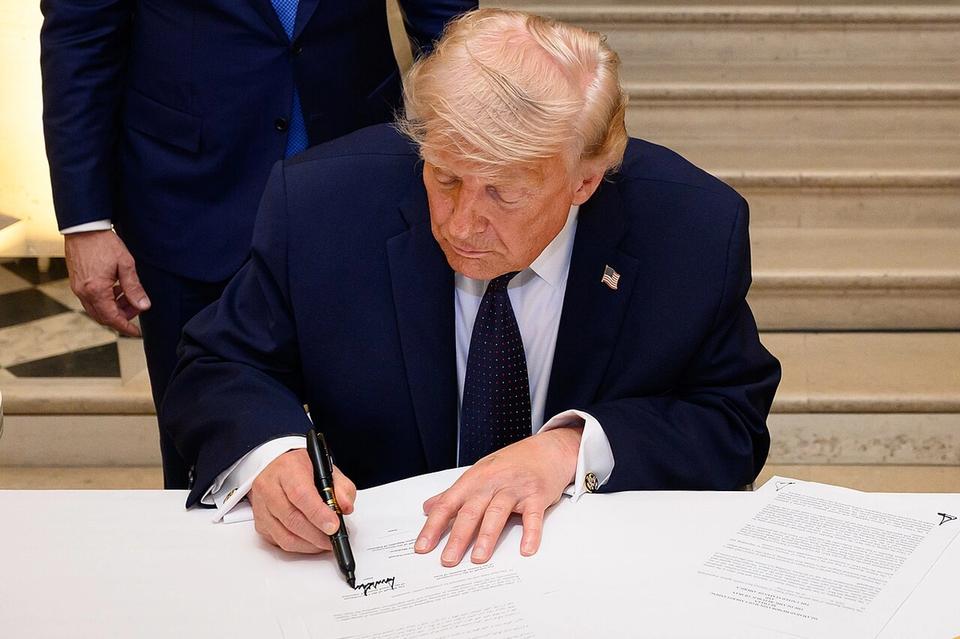

El Memorándum de Entendimiento de Islamabad, firmado entre Estados Unidos e Irán, fue presentado como un posible punto de inflexión en la dinámica de poder de Medio Oriente. Sin embargo, desde su firma el acuerdo arrastró fragilidades estructurales que explican por qué cayó.
The Islamabad Memorandum of Understanding, signed between the United States and Iran, was presented as a possible turning point in the power dynamics of the Middle East. However, from the moment it was signed, the agreement carried structural fragilities that explain why it ultimately fell apart.
El Memorándum de Entendimiento de Islamabad entre Estados Unidos e Irán abrió, desde el momento de su firma, múltiples interrogantes. Uno de los más cruciales se vinculaba con la seguridad y la libre navegación en el estrecho de Ormuz, un paso marítimo estratégico situado entre Irán y Omán. Esta vía constituye uno de los principales puntos de tránsito energético del mundo: por ella circula aproximadamente el 20% del consumo mundial de petróleo y derivados, además de cerca de una quinta parte del comercio global de gas natural licuado. En consecuencia, cualquier alteración de la navegación en el estrecho podía generar (y, de hecho, terminó) generando importantes efectos sobre los mercados energéticos, las cadenas de suministro y la estabilidad económica internacional.
El memorándum contemplaba la apertura inmediata del estrecho y el fin del bloqueo naval estadounidense sobre los puertos iraníes a partir del mes de abril. A cambio, Irán se comprometía a garantizar un paso seguro para los buques comerciales durante sesenta días. Ya en ese diseño se encontraba una primera fuente de fragilidad: el acuerdo dependía de que ambas partes ejecutaran, casi en simultáneo y sin mecanismos de verificación robustos, compromisos que tocaban intereses de seguridad de máxima sensibilidad para cada uno. Cada episodio de tensión en esa zona repercute no solo en la seguridad regional, sino también en los mercados internacionales de energía, por lo que cualquier desvío respecto de lo pactado tenía capacidad de escalar rápidamente. La estabilidad de Ormuz nunca dependió solo de una firma diplomática, sino de la capacidad —finalmente no demostrada— de los actores involucrados para sostener mecanismos de cooperación y evitar nuevas escaladas militares.
Otro punto discutido en el memorándum era el futuro del programa nuclear iraní. Desde hace años, este tema constituye uno de los principales focos de conflicto entre Irán, Estados Unidos y sus aliados. Para Washington, limitar las capacidades nucleares iraníes era una condición fundamental para la seguridad regional. En cambio, para Teherán, el desarrollo de su programa nuclear ha sido presentado como una cuestión de soberanía y autonomía estratégica. Esta diferencia de intereses de fondo nunca fue resuelta por el memorándum, sino apenas reordenada dentro de una nueva instancia de negociación, lo que dejaba al acuerdo sin una de sus piezas más determinantes para ser sostenible en el tiempo.
Una arquitectura expuesta al fracaso
El memorándum podía interpretarse, en el momento de su firma, como un posible punto de inflexión en la relación entre Estados Unidos e Irán, en la medida en que abría una nueva instancia de negociación luego de un período marcado por fuertes tensiones. Sin embargo, ya entonces faltaban elementos para asegurar que ese acercamiento pudiera producir una transformación duradera en la dinámica regional, y la posterior caída del acuerdo por incumplimientos que cada parte atribuyó a la otra, confirmó esa fragilidad de origen. El acuerdo demostró que, aun en contextos de fuerte rivalidad, existen incentivos para negociar: Estados Unidos buscaba reducir los costos políticos, militares y económicos de una escalada prolongada en Medio Oriente, e Irán necesitaba evitar un aislamiento mayor y preservar márgenes de acción en una región donde también compiten otras potencias e intereses. Pero esos incentivos para sentarse a negociar no equivalían a incentivos igual de sólidos para sostener lo firmado, y esa asimetría fue, en retrospectiva, uno de los factores centrales de su colapso. La diplomacia no apareció como una solución definitiva, sino como un mecanismo de contención transitorio, capaz de limitar la escalada por un tiempo pero no de sostener por sí mismo canales de diálogo sin garantías más firmes.
El rol de Estados Unidos en Medio Oriente también quedaba en discusión desde el inicio. Durante décadas, Washington mantuvo una presencia decisiva en la región, basada en alianzas estratégicas e intereses energéticos. Sin embargo, el ascenso de nuevas potencias, como China o Rusia, ha llevado a repensar esa presencia. Un acuerdo con Irán podía formar parte de una estrategia más amplia para intentar estabilizar la región a través de negociaciones estratégicas, como lo fue el memorándum; pero esa misma ambición de reconfigurar el orden regional mediante un instrumento bilateral y de cumplimiento no verificado anticipaba buena parte de las dificultades que luego se hicieron evidentes.
Los límites del entendimiento eran, de hecho, evidentes desde el principio. En Medio Oriente intervienen múltiples actores estatales y no estatales, con agendas propias y, muchas veces, contradictorias. Las alianzas son inestables, los conflictos se superponen y las disputas de seguridad se combinan con rivalidades religiosas, territoriales y económicas. Por eso, un acuerdo bilateral podía reducir ciertos riesgos, pero nunca estuvo en condiciones de resolver por sí solo la complejidad del escenario regional, y esa brecha entre lo que el memorándum prometía y lo que efectivamente podía garantizar terminó siendo una de sus principales debilidades.
Además, la desconfianza acumulada entre Estados Unidos e Irán constituía uno de los principales obstáculos para la construcción de un acuerdo eficaz y duradero. El verdadero desafío nunca fue únicamente firmar un entendimiento, sino construir garantías, canales de comunicación y mecanismos de verificación que permitieran sostenerlo en el tiempo, y ese desafío, en última instancia, no fue superado. El memorándum representó una oportunidad para abrir una nueva etapa de diálogo, especialmente en la medida en que redujo, por un período, la posibilidad de un enfrentamiento directo; pero terminó revelando, con el paso del tiempo, la persistencia de tensiones estructurales que resultaron, finalmente, insuperables dentro de ese marco.
En definitiva, el acuerdo entre Estados Unidos e Irán no resolvió por sí mismo los problemas de Medio Oriente, y su trayectoria posterior, marcada por acusaciones recíprocas de incumplimiento y su eventual caída, permite observar con claridad los dilemas centrales de la región: la disputa por la seguridad, el control de rutas energéticas, el peso de la desconfianza histórica y la dificultad de construir consensos en un escenario complejo. Su relevancia no estuvo solamente en lo que produjo de manera inmediata, sino en lo que su fracaso deja ver sobre los límites estructurales de la diplomacia en una región marcada por la rivalidad.
¿Por qué, entonces, un entendimiento que parecía abrir la puerta a un cambio duradero en el equilibrio de Medio Oriente terminó siendo apenas una pausa dentro de un conflicto más profundo? La respuesta se encuentra menos en la firma del memorándum que en su propio diseño: la ausencia de mecanismos de verificación creíbles, la falta de resolución de los nudos de fondo y la asimetría entre los incentivos para negociar y los incentivos para cumplir explican por qué el acuerdo estuvo, desde el comienzo, expuesto a un potencial fracaso.
The Islamabad Memorandum of Understanding between the United States and Iran raised, from the moment of its signing, multiple open questions. One of the most crucial concerned security and freedom of navigation in the Strait of Hormuz, a strategic maritime passage located between Iran and Oman. This waterway is one of the world's main energy transit points: approximately 20% of global oil and refined product consumption passes through it, along with nearly a fifth of the world's liquefied natural gas trade. As a result, any disruption to navigation in the strait could —and ultimately did— generate significant effects on energy markets, supply chains, and international economic stability.
The memorandum called for the immediate opening of the strait and the end of the US naval blockade on Iranian ports starting in April. In exchange, Iran committed to guaranteeing safe passage for commercial vessels for sixty days. That design already contained a first source of fragility: the agreement depended on both parties carrying out, almost simultaneously and without robust verification mechanisms, commitments that touched on security interests of the highest sensitivity for each side. Every episode of tension in that area affects not only regional security but also international energy markets, so any deviation from what was agreed had the capacity to escalate quickly. The stability of Hormuz never depended solely on a diplomatic signature, but on the ability (ultimately not demonstrated) of the actors involved to sustain cooperation mechanisms and avoid new military escalations.
Another point discussed in the memorandum was the future of Iran's nuclear program. For years, this issue has been one of the main sources of conflict between Iran, the United States, and its allies. For Washington, limiting Iran's nuclear capabilities was a fundamental condition for regional security. For Tehran, by contrast, developing its nuclear program has been presented as a matter of sovereignty and strategic autonomy. This underlying difference of interests was never resolved by the memorandum, but merely reordered within a new round of negotiations — leaving the agreement without one of the pieces most decisive to its long-term sustainability.
An architecture exposed to failure At the time of its signing, the memorandum could be interpreted as a possible turning point in the relationship between the United States and Iran, insofar as it opened a new round of negotiation after a period marked by strong tensions. However, even then there were not enough elements to guarantee that this rapprochement could produce a lasting transformation in the regional dynamic, and the agreement's subsequent collapse — driven by breaches each side attributed to the other — confirmed that original fragility.
The agreement showed that, even in contexts of intense rivalry, incentives to negotiate exist: the United States sought to reduce the political, military, and economic costs of a prolonged escalation in the Middle East, while Iran needed to avoid greater isolation and preserve room for maneuver in a region where other powers and interests also compete. But those incentives to sit down and negotiate were never matched by equally solid incentives to sustain what had been signed, and that asymmetry was, in retrospect, one of the central factors behind its collapse. Diplomacy did not emerge as a definitive solution, but as a transitional containment mechanism — capable of limiting escalation for a time, but not of sustaining channels of dialogue on its own without firmer guarantees.
The role of the United States in the Middle East was also in question from the outset. For decades, Washington maintained a decisive presence in the region, built on strategic alliances and energy interests. However, the rise of new powers such as China and Russia has prompted a rethinking of that presence. An agreement with Iran could form part of a broader strategy to try to stabilize the region through strategic negotiations, as the memorandum was; but that same ambition to reconfigure the regional order through a bilateral, unverified-compliance instrument foreshadowed much of the difficulty that later became evident.
The limits of the understanding were, in fact, evident from the start. Multiple state and non-state actors operate in the Middle East, each with its own agenda. Alliances are unstable, conflicts overlap, and security disputes are intertwined with religious, territorial, and economic rivalries. For that reason, a bilateral agreement could reduce certain risks, but it was never in a position to resolve the complexity of the regional landscape on its own, and that gap between what the memorandum promised and what it could actually guarantee ended up being one of its main weaknesses.
Moreover, the accumulated distrust between the United States and Iran was one of the main obstacles to building an effective, lasting agreement. The real challenge was never simply signing an understanding, but building the guarantees, communication channels, and verification mechanisms needed to sustain it over time. That challenge was, ultimately, never overcome. The memorandum represented an opportunity to open a new stage of dialogue, especially insofar as it reduced, for a period, the likelihood of direct confrontation; but it ended up revealing, over time, the persistence of structural tensions that proved, in the end, insurmountable within that framework.
Ultimately, the agreement between the United States and Iran did not resolve the Middle East's problems on its own, and its subsequent trajectory, marked by mutual accusations of non-compliance and its eventual collapse, offers a clear view of the region's central dilemmas: the dispute over security, control of energy routes, the weight of historical distrust, and the difficulty of building consensus in a complex landscape. Its relevance lay not only in what it produced immediately, but in what its failure reveals about the structural limits of diplomacy in a region marked by rivalry.
Why, then, did an understanding that seemed to open the door to a lasting shift in the Middle East's balance of power end up being little more than a pause within a deeper conflict? The answer lies less in the signing of the memorandum than in its own design: the absence of credible verification mechanisms, the failure to resolve the underlying sticking points, and the asymmetry between the incentives to negotiate and the incentives to comply explain why the agreement was, from the beginning, exposed to potential failure.
Artículos relacionados
Related articles
América Latina vuelve al tablero: por qué Estados Unidos volvió a pensar la región como prioridad
Latin America Returns to the Board: Why the United States Has Once Again Made the Region a Priority

¿Cómo financiamos una América Latina sostenible?
How could we finance a sustainable Latin America?