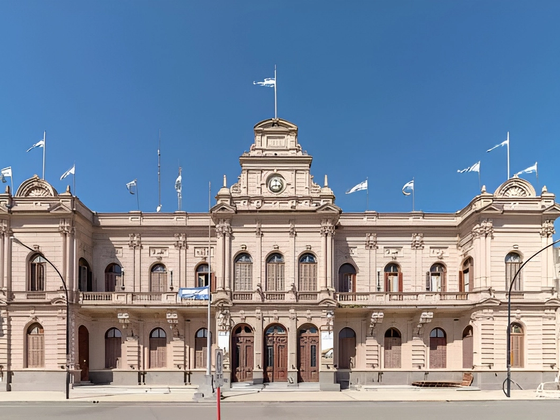
Europa frente a un orden mundial en disputa
Europe Faced with a Disputed World Order
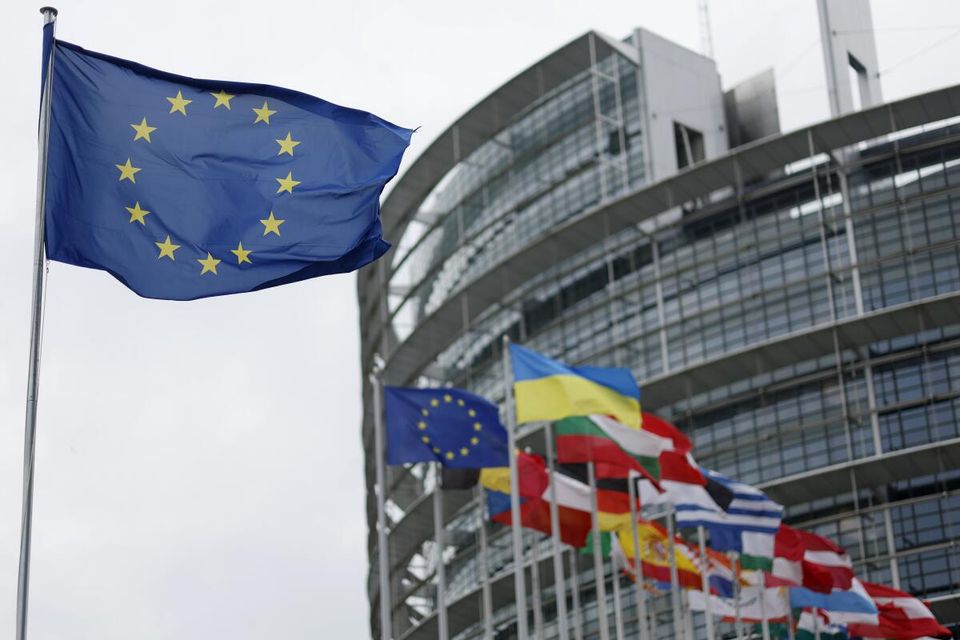

El boicot de Estados Unidos al G20 en Johannesburgo y la organización de una nueva edición bajo sus propias reglas revelan algo más profundo: el debilitamiento del orden liberal internacional. El Informe de Seguridad de Múnich 2026 denominó este fenómeno "wrecking-ball politics", fuerzas políticas que prefieren demoler sobre reformar, e instó a los Estados a actuar como "Bolder Builders" que aboguen por la reconstrucción multilateral. Ante el riesgo de que el G20 se convierta en un foro de imposición unilateral, Europa busca construir autonomía estratégica para preservar los pilares del orden global. La pregunta es si logrará hacerlo a tiempo.
The United States' boycott of the G20 in Johannesburg and the organization of a new edition under its own rules reveal something deeper: the weakening of the international liberal order. The 2026 Munich Security Report termed this phenomenon "wrecking-ball politics"—political forces that prefer to demolish rather than reform—and urged States to act as "Bolder Builders" who advocate for multilateral reconstruction. Faced with the risk of the G20 becoming a forum for unilateral imposition, Europe seeks to build strategic autonomy to preserve the pillars of the global order. The question is whether it will manage to do so in time.
El boicot de Estados Unidos al Grupo de los Veinte (G20) en Johannesburgo ilustra el choque entre dos modelos del orden mundial. En 2025, el G20 se realizó en Sudáfrica con una agenda basada en el lema "Solidaridad, Igualdad y Sostenibilidad", el cual contradecía la política de Estados Unidos, quien decidió no asistir a la cumbre. En 2026, este último decidió excluir al anterior anfitrión de la convocatoria.
Hoy nos encontramos en la antesala a una nueva edición del G20 que se realizará en Estados Unidos. El evento contará con una agenda reducida a los tres temas que Washington considera prioritarios: cadenas de suministro, energía y tecnología. Bajo esa misma lógica de exclusión, no han sido invitados los Estados observadores ni Sudáfrica. Así, este foro, que representa aproximadamente el 85% del PBI global, se está convirtiendo en un club de aliados selectivos en lugar de un espacio multilateral. Detrás de esto hay algo más profundo: el debilitamiento del orden liberal internacional, su sistema de instituciones y las reglas multilaterales construidas tras la Segunda Guerra Mundial. El Informe de Seguridad de Múnich 2026 (MSR 2026) utilizó la expresión “wrecking-ball politics” para referirse a las fuerzas políticas que, como los EEUU, prefieren demoler sobre reformar. Si bien Estados Unidos lidera esta tendencia, dentro del G7 también existen fuerzas que coinciden con esta línea. Esto confirma que no se trata de casos aislados, sino de un cambio estructural en el teatro internacional.
El orden liberal que rigió en las últimas décadas se caracterizó por la cooperación entre Estados, el respeto a las instituciones y agendas que abarcaban temáticas sociales, ambientales y de desarrollo basadas en el beneficio mutuo. Hoy ese modelo enfrenta un desafío: uno donde el más poderoso busca siempre llevarse la mayor parte, las negociaciones entre dos países reemplazan a los acuerdos colectivos y las instituciones solo valen si sirven a los intereses del más fuerte. Walt sintetiza la lógica del más poderoso como: "lo mío es mío, y lo tuyo es negociable". La reducción de la agenda del G20, la exclusión de invitados y el retiro de EE.UU de numerosas instituciones multilaterales son la expresión tangible de este segundo modelo.
La autonomía estratégica como respuesta
Europa se encuentra ante la ardua tarea de entender cómo adaptarse a este nuevo escenario. Los resultados del MSR 2026 no sugieren que el viejo continente deba abandonar el multilateralismo, sino que para defenderlo primero deberá construir su propio poder. Los “Bolder Builders” deben ser tan audaces como sus oponentes. De ahí que la autonomía estratégica aparezca como respuesta necesaria, entendida como la capacidad de Europa de defender sus intereses y seguridad sin depender de Washington. El problema es que esa dependencia se construyó durante décadas en las que países europeos delegaron su defensa en EEUU, asumiendo que esa garantía era incondicional y hoy esa certeza ya no existe.
Los intentos europeos por construir independencia son concretos pero insuficientes. Los miembros de la OTAN aumentaron su gasto en defensa un 41% entre 2021 y 2025. En el plano comercial, la UE firmó acuerdos comerciales con México, Indonesia y el Mercosur. Sin embargo, esta búsqueda de autonomía es un proceso de construcción lento, y en el MSR 2026 se advierte que estos esfuerzos son aún insuficientes y que la superación de la dependencia estructural está lejos de completarse.
¿Llegará Europa a tiempo?
Si bien Walt advierte que la hegemonía depredadora puede no ser viable a largo plazo, lo cierto es que hoy se impone y amenaza con reconfigurar el orden mundial. Europa debe actuar con urgencia: el conflicto entre modelos puso en evidencia que principios que se daban por sentados, como las reglas de cooperación, las instituciones o quién decide la agenda global, pueden cambiar radicalmente. El MSR 2026 llama a los Estados a convertirse en “Bolder Builders“ en un mundo “Under Destruction”. La verdadera pregunta no es si este nuevo sistema logrará sobrevivir, sino si Europa logrará construir autonomía estratégica a tiempo, para así tener voz cuando el orden mundial se reconstruya.
The United States' boycott of the Group of Twenty (G20) in Johannesburg illustrates the clash between two models of world order. In 2025, the G20 was held in South Africa with an agenda based on the motto "Solidarity, Equality, and Sustainability," which contradicted the policy of the United States, which decided not to attend the summit. In 2026, the latter decided to exclude the previous host from the gathering.
Today we find ourselves on the eve of a new edition of the G20 to be held in the United States. The event will feature an agenda reduced to the three topics that Washington considers priorities: supply chains, energy, and technology. Under that same logic of exclusion, neither observer States nor South Africa have been invited. Thus, this forum, which represents approximately 85% of global GDP, is becoming a club of selective allies instead of a multilateral space. Behind this lies something deeper: the weakening of the international liberal order, its system of institutions, and the multilateral rules built after World War II. The 2026 Munich Security Report (MSR 2026) used the expression “wrecking-ball politics” to refer to political forces that, like the US, prefer to demolish rather than reform. While the United States leads this trend, there are also forces within the G7 that align with this line. This confirms that these are not isolated cases, but a structural change in the international theater.
The liberal order that ruled in recent decades was characterized by cooperation among States, respect for institutions, and agendas that covered social, environmental, and development issues based on mutual benefit. Today, that model faces a challenge: one where the most powerful always seeks to take the largest share, negotiations between two countries replace collective agreements, and institutions are only valuable if they serve the interests of the strongest. Walt summarizes the logic of the most powerful as: "what's mine is mine, and what's yours is negotiable." The reduction of the G20 agenda, the exclusion of guests, and the US withdrawal from numerous multilateral institutions are the tangible expression of this second model.
Strategic autonomy as a response
Europe faces the arduous task of understanding how to adapt to this new scenario. The results of the MSR 2026 do not suggest that the old continent should abandon multilateralism, but rather that to defend it, it must first build its own power. The “Bolder Builders” must be as audacious as their opponents. Hence, strategic autonomy appears as a necessary response, understood as Europe's capacity to defend its interests and security without depending on Washington. The problem is that this dependence was built over decades in which European countries delegated their defense to the US, assuming that this guarantee was unconditional, and today that certainty no longer exists.
European attempts to build independence are concrete but insufficient. NATO members increased their defense spending by 41% between 2021 and 2025. On the commercial front, the EU signed trade agreements with Mexico, Indonesia, and Mercosur. However, this pursuit of autonomy is a slow construction process, and the MSR 2026 warns that these efforts are still insufficient and that overcoming structural dependence is far from complete.
Will Europe arrive in time?
Although Walt warns that predatory hegemony may not be viable in the long term, the truth is that today it imposes itself and threatens to reconfigure the world order. Europe must act with urgency: the conflict between models has made it clear that principles taken for granted—such as the rules of cooperation, institutions, or who decides the global agenda—can change radically. The MSR 2026 calls on States to become “Bolder Builders” in a world “Under Destruction.” The real question is not whether this new system will manage to survive, but whether Europe will manage to build strategic autonomy in time to have a voice when the world order is reconstructed.
Artículos relacionados
Related articles
América Latina vuelve al tablero: por qué Estados Unidos volvió a pensar la región como prioridad
Latin America Returns to the Board: Why the United States Has Once Again Made the Region a Priority

¿Cómo financiamos una América Latina sostenible?
How could we finance a sustainable Latin America?