Fuego en la Patagonia: desafíos y respuestas ante una crisis ambiental
Fire in Patagonia: Challenges and Responses to an Environmental Crisis
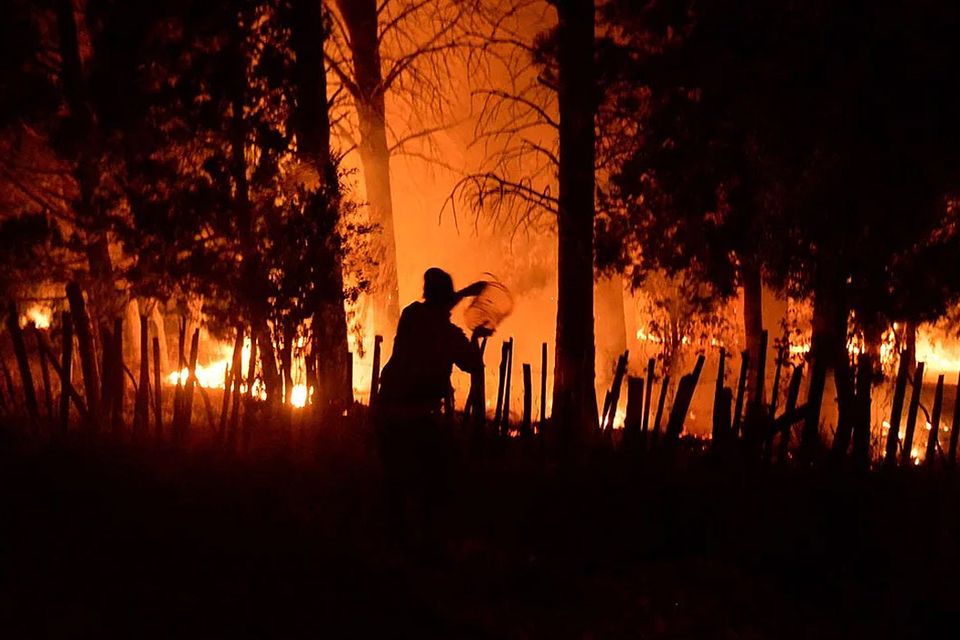

Los incendios forestales en la Patagonia argentina se han convertido en un fenómeno recurrente, con impactos devastadores en el ecosistema, la economía y la población local. En las ultimas semanas por los incendios se perdieron entre Neuquen, Rio Negro y Chubut mas de 36 mil hectareas de bosques y viviendas. La situación más alarmante es la de la región de El Bolson en el cual se incendiaron alrededor de 120 hogares y falleció un hombre. La magnitud de estos incidentes y su creciente frecuencia plantean interrogantes sobre las estrategias de prevención. Además, surge la necesidad de una ley que determine qué actividades humanas se pueden realizar en cada lugar debido al carácter negligente o intencional de los incendios.
Forest fires in the Argentine Patagonia have become a recurrent phenomenon, with devastating impacts on the ecosystem, the economy, and the local population. In recent weeks, fires have destroyed more than 36,000 hectares of forests and homes across Neuquén, Río Negro, and Chubut. The most alarming situation is in the El Bolsón region, where around 120 homes were burned and one man died. The magnitude of these incidents and their increasing frequency raise questions about prevention strategies. Furthermore, the need arises for a law to determine which human activities can be carried out in each location due to the negligent or intentional nature of the fires.
El papel del Ejército Argentino en la emergencia
Ante la insuficiencia de recursos provinciales para combatir los incendios forestales, las Fuerzas Armadas operan subsidiariamente en el lugar, asegurando que brigadistas y equipos técnicos sean capaces de llegar a los focos de los incendios. Además, están a cargo del montaje y mantenimiento de los campamentos, el abastecimiento de agua potable, la infraestructura para el alojamiento y la distribución de raciones diarias y donaciones. También realizan monitoreos con drones para evaluar la evolución del incendio. En total, se asiste a alrededor de 500 brigadistas.
En las zonas afectadas se desarrolla hace semanas un operativo que incluye el despliegue en de 9 aviones AT-802, 10 helicópteros, 14 camiones, 5 camionetas, 4 autobombas forestales y 4 camiones dormitorios, además de una planta potabilizadora con capacidad de producción de 5.000 litros diarios de agua potable.
Consecuencias ambientales, económicas y sociales
A pesar del accionar del Estado, los incendios en la Patagonia generan impactos en múltiples niveles. En términos ambientales, provocan la destrucción de bosques nativos, la pérdida de biodiversidad y con la suba de temperatura global también se producen mayores sequías y vientos, lo que convierte a la Patagonia en un lugar ideal para incendios descontrolados. Además de esto, la degradación del suelo compromete la regeneración del ecosistema, aumentando la vulnerabilidad de la región frente a futuros desastres naturales.
Desde el punto de vista económico, las pérdidas son significativas. La destrucción de tierras productivas afecta a sectores como la ganadería y el turismo, pilares de la economía patagónica. Además, la reconstrucción de infraestructura y la asistencia a damnificados representan un costo considerable para el Estado.
En el plano social, los incendios generan desplazamientos de población, problemas de salud por la inhalación de humo y una creciente sensación de inseguridad en las comunidades afectadas. El Gobierno Nacional enviará $5.000 millones a Río Negro para la reconstrucción de viviendas en El Bolsón, incendio que arrasó con más de 120 hogares y generó graves pérdidas materiales.
Penalización de los incendios provocados
Uno de los principales desafíos en la lucha contra este tipo de emergencias es su intencionalidad . Desde el Ministerio de Defensa se ha catalogado a estos actos como “Terroristas”, instando a la Justicia y a los fiscales al endurecimiento de las penas de prisión y a la imposición de multas para quienes provoquen incendios de manera intencional o por negligencia (fogones mal apagados o cigarrillos). No obstante, la dificultad para identificar y sancionar a los responsables sigue siendo un obstáculo. Los gobernadores de Chubut y Río Negro coincidieron en que se trata de un incendio intencional apuntando a grupos mapuches. En Río Negro, se detuvieron a 6 personas por estar presuntamente involucradas en la quema intencional y fueron liberadas a las pocas horas.
Fortalecer los mecanismos de investigación y aumentar la presencia de vigilancia ambiental podría contribuir a una mayor disuasión y reducción de estos delitos. Asimismo, es crucial concientizar a la población sobre las graves consecuencias legales y ambientales de estas acciones.
Los incendios en la Patagonia no solo representan una crisis ambiental y humanitaria, sino también un llamado de atención sobre la necesidad de implementar estrategias integrales y coordinadas para su prevención y control. El rol del Ejército Argentino en la contención de estos desastres es fundamental, pero debe complementarse con políticas de prevención más robustas para proteger los ecosistemas patagónicos y garantizar la sostenibilidad de la región en el largo plazo.
The Role of the Argentine Army in the Emergency
Faced with the insufficiency of provincial resources to combat forest fires, the Armed Forces operate in a subsidiary capacity on the ground, ensuring that brigade members and technical teams are able to reach the hotspots of the fires. Furthermore, they are in charge of setting up and maintaining camps, providing drinking water, housing infrastructure, and distributing daily rations and donations. They also perform monitoring with drones to evaluate the evolution of the fire. In total, around 500 brigade members receive assistance.
An operation has been underway for weeks in the affected areas, including the deployment of 9 AT-802 aircraft, 10 helicopters, 14 trucks, 5 pickup trucks, 4 forest fire engines, and 4 sleeper trucks, as well as a water treatment plant with a production capacity of 5,000 liters of drinking water per day.
Environmental, Economic, and Social Consequences
Despite the State's actions, the fires in Patagonia generate impacts on multiple levels. In environmental terms, they cause the destruction of native forests, the loss of biodiversity, and with the rise in global temperature, greater droughts and winds are also produced, turning Patagonia into an ideal place for uncontrolled fires. In addition to this, soil degradation compromises the regeneration of the ecosystem, increasing the region's vulnerability to future natural disasters.
From an economic point of view, the losses are significant. The destruction of productive lands affects sectors such as livestock and tourism, pillars of the Patagonian economy. Furthermore, the reconstruction of infrastructure and assistance to victims represent a considerable cost for the State.
On the social plane, the fires generate population displacements, health problems due to smoke inhalation, and a growing sense of insecurity in the affected communities. The National Government will send 5 billion pesos to Río Negro for the reconstruction of homes in El Bolsón, a fire that wiped out more than 120 homes and generated severe material losses.
Penalization of Arson
One of the main challenges in the fight against this type of emergency is its intentional nature. The Ministry of Defense has classified these acts as "Terrorist," urging the judiciary and prosecutors to stiffen prison sentences and impose fines on those who cause fires intentionally or through negligence (poorly extinguished campfires or cigarettes). Nevertheless, the difficulty in identifying and punishing those responsible remains an obstacle. The governors of Chubut and Río Negro agreed that it is an intentional fire, pointing to Mapuche groups. In Río Negro, 6 people were detained for being presumably involved in the intentional burning and were released a few hours later.
Strengthening investigation mechanisms and increasing the presence of environmental surveillance could contribute to greater deterrence and a reduction in these crimes. Likewise, it is crucial to raise awareness among the population about the serious legal and environmental consequences of these actions.
The fires in Patagonia represent not only an environmental and humanitarian crisis, but also a wake-up call regarding the need to implement comprehensive and coordinated strategies for their prevention and control. The role of the Argentine Army in containing these disasters is fundamental, but it must be complemented by more robust prevention policies to protect Patagonian ecosystems and guarantee the long-term sustainability of the region.
Artículos relacionados
Related articles

¿Cómo financiamos una América Latina sostenible?
How could we finance a sustainable Latin America?

Tecnologías críticas y competencia global: ¿qué lugar ocupa Argentina?
Critical technologies and global competition: where does Argentina stand?