Juventudes y política en Argentina: ¿cómo se construyen las nuevas agendas?
Youth and politics in Argentina: how are the new agendas built?
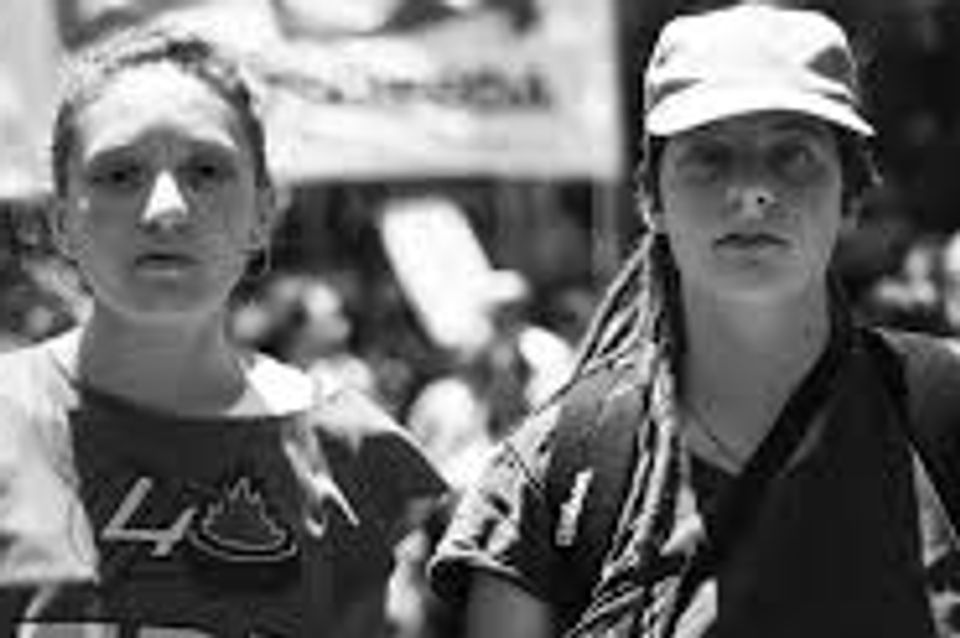

Las juventudes argentinas cargan con una paradoja: son vistas como símbolo de renovación, pero rara vez son incluidas en los espacios donde se define el poder real. En una era de precariedad económica y fragmentación política, su activismo se desplaza hacia las redes, los colectivos alternativos y los lenguajes propios. Este análisis explora hasta qué punto los partidos y liderazgos tradicionales realmente escuchan a las nuevas generaciones o si, por el contrario, se limitan a capitalizar su energía simbólica sin ceder espacios de decisión.
Argentine youth carry a paradox: they are seen as a symbol of renewal, but are rarely included in the spaces where real power is defined. In an era of economic precariousness and political fragmentation, their activism is shifting towards networks, alternative collectives, and their own languages. This analysis explores to what extent traditional parties and leaderships really listen to the new generations or if, on the contrary, they limit themselves to capitalizing on their symbolic energy without ceding decision-making spaces.
En la historia reciente argentina, las juventudes han sido descritas como fuerzas de cambio, protagonistas de ciclos políticos y sociales transformadores. Sin embargo, hoy la pregunta se complejiza: ¿los y las jóvenes realmente tienen la capacidad de incidir en la agenda pública, o su protagonismo es más simbólico que efectivo?
A fines prácticos, definiremos por juventud a las personas menores de 29 años. En una Argentina marcada por la incertidumbre económica, la fragmentación política y la precariedad generalizada, esta franja etaria parece estar tironeada entre sus deseos de participación y una enorme desilusión. No estamos ante una juventud apática, pero sí frente a una generación que, en muchos casos, no encuentra canales institucionales ni espacios partidarios que representen sus intereses. El territorio ya no es el único lugar donde se construye lo político; las redes sociales, los espacios comunitarios alternativos, los activismos descentralizados y los lenguajes propios dan forma a nuevas formas de acción política y simbólica.
Frente a la ausencia de espacios en la política tradicional, o lo que muchas veces se sintetiza como "la casta", ha intentado apropiarse de estas nuevas formas discursivas. Se intenta hablar como los jóvenes, pero no se los integra realmente. ¿Hasta qué punto los partidos escuchan lo que las juventudes proponen? ¿Lo hacen por convicción, por oportunismo electoral o por miedo a quedar fuera de época? Las juventudes, por su parte, navegan un escenario de ambivalencia: por un lado buscan incidir en los marcos existentes; por el otro, construyen nuevas alternativas fuera de ellos. Si bien hay una generación activa en redes, visible en marchas, en colectivos feministas, ambientalistas o estudiantiles, eso no necesariamente se traduce en poder de decisión.
Otro aspecto clave es la relación intergeneracional. ¿Qué lugar dan los liderazgos históricos a las nuevas voces? Muchas veces se espera que los y las jóvenes "militan desde abajo", sin ofrecerles herramientas reales para incidir en la toma de decisiones. Se los convoca para subir carteles, pero no para pensar estrategias. Se los celebra en los discursos, pero se los margina de las decisiones. Esta exclusión muchas veces sutil, refuerza la percepción de que las juventudes son valoradas como “capital simbólico” pero no como sujetos políticos plenos.
No queremos caer en una narrativa ingenua de la juventud como “vanguardia pura”, ni tampoco en la caricatura conservadora de los jóvenes como superficiales o frágiles. El objetivo es mirar con honestidad una realidad compleja, sin romantizar pero sin desestimar. ¿Qué disputan realmente las juventudes? ¿Cómo se construyen hoy sus agendas? ¿Cuáles son los límites y cuáles las potencias de esta generación? El acceso a debates globales, la fluidez para construir nuevas identidades políticas, el uso estratégico de las plataformas digitales y la capacidad de autogestión son parte de las fortalezas que caracterizan a las juventudes actuales.
No hay respuestas cerradas. Pero sí hay una certeza: las juventudes están haciendo política, aunque no siempre donde se las espera, ni cómo se las imagina. Habrá que ver si las estructuras tradicionales están dispuestas a escucharlas de verdad, o si seguirán optando por traducir sus lenguajes sin comprender sus demandas. Y sobre todo, habrá que pensar si los jóvenes pueden (y quieren) transformar un sistema que muchas veces parece no haber sido hecho para ellos.
In recent Argentine history, youth have been described as forces for change, protagonists of transformative political and social cycles. However, today the question is more complex: do young people really have the capacity to influence the public agenda, or is their role more symbolic than effective?
For practical purposes, we will define youth as people under 29 years old. In an Argentina marked by economic uncertainty, political fragmentation, and generalized precariousness, this age group seems to be torn between their desire to participate and immense disillusionment. We are not facing an apathetic youth, but rather a generation that, in many cases, does not find institutional channels or party spaces that represent its interests. The territory is no longer the only place where the political is built; social networks, alternative community spaces, decentralized activism, and the youth's own languages shape new forms of political and symbolic action.
Faced with the absence of spaces in traditional politics, what is often synthesized as "the casta" has attempted to appropriate these new discursive forms. They try to speak like young people, but they do not truly integrate them. To what extent do parties listen to what youth propose? Do they do it out of conviction, electoral opportunism, or fear of becoming obsolete? Young people, for their part, navigate a scenario of ambivalence: on one hand, they seek to influence existing frameworks; on the other, they build new alternatives outside of them. Although there is a generation active on social media, visible in marches, in feminist, environmental, or student collectives, that does not necessarily translate into decision-making power.
Another key aspect is the intergenerational relationship. What place do historical leaders give to new voices? It is often expected that young people "militate from below," without offering them real tools to influence decision-making. They are called upon to put up posters, but not to think about strategies. They are celebrated in speeches, but marginalized from decisions. This often subtle exclusion reinforces the perception that youth are valued as "symbolic capital" but not as full political subjects.
We do not want to fall into a naive narrative of youth as a "pure vanguard," nor into the conservative caricature of young people as superficial or fragile. The goal is to honestly look at a complex reality, without romanticizing but without dismissing. What do young people really dispute? How are their agendas built today? What are the limits and the potentials of this generation? Access to global debates, the fluidity to build new political identities, the strategic use of digital platforms, and the capacity for self-management are part of the strengths that characterize today's youth.
There are no closed answers. But there is a certainty: young people are doing politics, although not always where they are expected to be, nor how they are imagined. It remains to be seen if traditional structures are willing to truly listen to them, or if they will continue to opt to translate their languages without understanding their demands. And above all, it remains to be seen whether young people can (and want to) transform a system that often seems not to have been made for them.
Artículos relacionados
Related articles
Paradiplomacia y nuevas formas de inserción internacional en Argentina
Paradiplomacy and new forms of international insertion in Argentina
Mayor paridad política, ¿más beneficios para las mujeres?
More Political Parity, More Benefits for Women?