“La calle” ya no es solo de asfalto: redes sociales, política y juventudes
“The street” is no longer just asphalt: social networks, politics, and youth
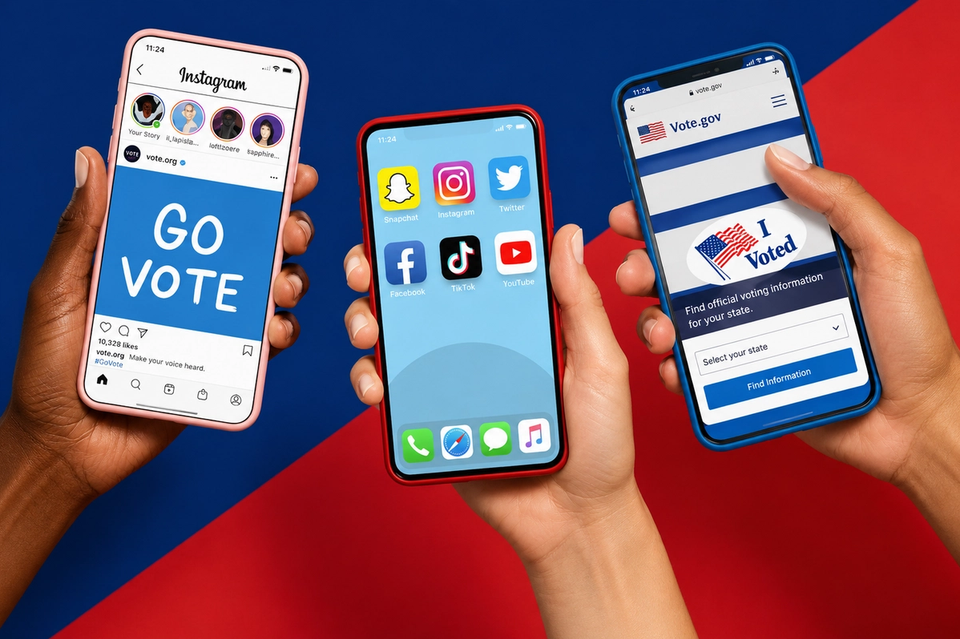

La política ya no se juega solo en la calle ni en los medios tradicionales. En el nuevo ecosistema digital, los hilos de X, los edits virales y las historias de Instagram se han vuelto formas legítimas de militancia. Este análisis traza el desplazamiento del espacio público hacia territorios digitales, donde la lógica del algoritmo reemplaza a la del comité, y la eficacia simbólica depende más del tono y el timing que del discurso programático. Una reflexión sobre cómo las juventudes están rehaciendo la política —aunque no siempre se las reconozca por ello.
Politics is no longer played out solely on the street or in traditional media. In the new digital ecosystem, X threads, viral edits, and Instagram stories have become legitimate forms of militancy. This analysis traces the displacement of public space toward digital territories, where the logic of the algorithm replaces that of the committee, and symbolic effectiveness depends more on tone and timing than on programmatic discourse. A reflection on how youth are remaking politics —even if they are not always recognized for it.
Algo no está donde solía. La política, esa palabra pesada, institucional, con trajes y escenarios previsibles ya no se expresa de la misma manera. Hoy puede ser un meme, un comentario irónico en una historia de Instagram, un hilo de X o un video que dura menos de un minuto.
Las redes sociales no son solo un nuevo canal de este desplazamiento, y las juventudes no son simplemente “usuarios”. Lo que está en juego es otra forma de construir sentido político, desde otros lugares, con otros códigos y cuerpos. Y aunque a veces parezca desordenado o superficial, en realidad hay algo mucho más profundo en ese movimiento.
De la transmisión al algoritmo: otro mapa de circulación política
Durante años, la comunicación política era pesada en función de partidos que emiten discursos y medios de comunicación que los transmiten. La ciudadanía era, en general, una audiencia que recibía e interpretaba estos mensajes, pero sin intervenir demasiado en su producción.
Hoy esa lógica se desarma. Las redes no solo permiten que cualquiera publique, sino que cambian el modo en que los mensajes circulan. Lo que se ve depende del algoritmo, de la interacción, del diseño de las plataformas y de decisiones individuales que producen efectos colectivos. La viralización no responde a jerarquías políticas, sino a estructuras técnicas combinadas con afectos, humores y climas sociales.
La política se convierte así en un fenómeno disperso. No hay un solo centro emisor. Hay miles posibles, a veces sin rostro ni estructura. Desde ahí, la militancia también se transforma. Ya no es solo volantear en una esquina o marchar con una bandera: puede ser hacer un edit con una canción popular que cruce la estética del entretenimiento con una crítica económica. Puede ser tomar una frase de un funcionario y re-contextualizarla con sarcasmo. Puede ser una historia que desaparece en 24 horas, pero: ¿deja huella en quién la ve?
La política infiltrada: ¿La buscamos o nos encuentra?
En este nuevo escenario también cambian los actores. Ya no son solo partidos, movimientos o medios los que moldean el discurso público. Aparecen influencers que, sin militar formalmente, tienen una llegada masiva al electorado. Cuentas anónimas que publican datos o análisis con impacto. Usuarios comunes que, sin buscarlo, se vuelven referentes de un tema por la forma en que lo comunican.
Esto no significa que desaparezcan los espacios tradicionales. Pero sí que pierden centralidad en algunos segmentos, especialmente entre los jóvenes. Quienes no se ven reflejados en los discursos políticos clásicos encuentran otras voces, otras estéticas, otros ritmos, que reivindican sus ideales y se vuelven frecuentes en sus algoritmos. A veces la política se filtra en el entretenimiento. Otras veces el entretenimiento se vuelve político sin ser explícito.
Este fenómeno desafía la idea de que hay una ciudadanía que se “informa” de manera deliberada. Gran parte del contacto con la política ocurre en momentos donde el objetivo era otro: ver un video gracioso, seguir una tendencia, distraerse. Pero incluso ahí, lo político se filtra. No es un dato menor: eso transforma las formas de percibir y pensar lo público.
Del meme a la calle (y viceversa)
Ahora bien, ¿qué pasa con el territorio? ¿Quedó obsoleto en esta nueva lógica digital? ¿Las redes reemplazaron la calle? No exactamente. Lo que ocurre es un cambio de jerarquía. La calle sigue siendo importante, pero ya no funciona sola. Los reclamos necesitan circular también en lo digital. Una marcha, por más masiva que sea, si no tiene reflejo en redes, pierde impacto. Y al mismo tiempo, una campaña digital sin anclaje en algún tipo de realidad física, corre el riesgo de volverse efímera, de no pisar nunca el suelo.
Hay una doble dimensión: la territorialidad como experiencia concreta, física, emocional; y la visibilidad digital como modo de validación, de expansión, de archivo. El gesto político hoy no se completa solo con estar en la calle: necesita ser contado, mostrado, interpretado, compartido. Y eso no es menos político. Es parte de cómo se construye el consenso o la disidencia.
Las juventudes lo entienden. No lo piensan necesariamente en esos términos, pero lo hacen. Participan de marchas, sí, pero también militan desde sus dispositivos. No se oponen. Se complementan. Y muchas veces, la potencia aparece justo en esa intersección.
Lenguajes nuevos para un mundo viejo
Hay algo más profundo todavía: los lenguajes con los que se comunica la política ya no son los mismos. Y eso no es solo una cuestión estética. Es una cuestión de eficacia simbólica. Quien no logra traducirse a los códigos actuales, queda afuera de la conversación.
No se trata de “hablar joven”. Se trata de entender que hoy la comunicación política es fragmentaria, irónica, performática, emocional. No por superficial, sino porque así es el ecosistema donde circula. Las reglas de juego no las escriben solamente los partidos. Las escriben también los usuarios, los formatos, los tiempos. El discurso político no es solo lo que se dice, sino cómo, dónde, con qué tono y con qué cuerpo.
Frente a eso, muchos espacios tradicionales no logran adaptarse. Siguen insistiendo en formatos largos, rígidos, institucionales. Como si no hubiera cambiado nada. Pero todo cambió. No se trata de abandonar la profundidad o la estructura, sino de encontrar nuevas formas de hacerlas dialogar con la sensibilidad contemporánea.
Esto no quiere decir que todo valga. Hay problemas reales con la política digital: manipulación, desinformación, polarización afectiva. Pero tampoco se puede subestimar su potencial. Las redes son un espacio de disputa simbólica real. Y si se las ignora, se entrega ese espacio a quienes sí saben operar ahí.
Something is not where it used to be. Politics, that heavy, institutional word, with predictable suits and stages, is no longer expressed in the same way. Today it can be a meme, an ironic comment on an Instagram story, an X thread, or a video that lasts less than a minute.
Social networks are not just a new channel for this displacement, and youth are not simply "users." What is at stake is another way of constructing political meaning, from other places, with other codes and bodies. And although it sometimes seems messy or superficial, there is actually something much deeper in that movement.
From transmission to the algorithm: another map of political circulation
For years, political communication was heavy, based on parties that broadcast speeches and media outlets that transmitted them. The citizenry was, in general, an audience that received and interpreted these messages, but without intervening too much in their production.
Today that logic is being dismantled. Networks not only allow anyone to publish, but they also change the way messages circulate. What is seen depends on the algorithm, on interaction, on the design of the platforms, and on individual decisions that produce collective effects. Viralization does not respond to political hierarchies, but to technical structures combined with affects, moods, and social climates.
Politics thus becomes a dispersed phenomenon. There is no single broadcasting center. There are thousands possible, sometimes without a face or structure. From there, militancy is also transformed. It is no longer just handing out flyers on a corner or marching with a flag: it can be making an edit with a popular song that crosses the aesthetics of entertainment with an economic critique. It can be taking a phrase from an official and re-contextualizing it with sarcasm. It can be a story that disappears in 24 hours, but: does it leave a mark on those who see it?
Infiltrated politics: do we look for it or does it find us?
In this new scenario, the actors also change. It is no longer just parties, movements, or media outlets that shape public discourse. Influencers appear who, without formally militating, have a massive reach to the electorate. Anonymous accounts that publish data or analyses with impact. Common users who, without seeking it, become references on a topic due to the way they communicate it.
This does not mean that traditional spaces disappear. But they do lose centrality in some segments, especially among the youth. Those who do not see themselves reflected in classic political discourses find other voices, other aesthetics, other rhythms, which claim their ideals and become frequent in their algorithms. Sometimes politics seeps into entertainment. Other times entertainment becomes political without being explicit.
This phenomenon challenges the idea that there is a citizenry that "informs itself" in a deliberate way. A large part of the contact with politics occurs in moments where the goal was something else: watching a funny video, following a trend, getting distracted. But even then, politics seeps in. This is not a minor fact: it transforms the ways of perceiving and thinking about the public.
From the meme to the street (and viceversa)
Now, what happens with territory? Has it become obsolete in this new digital logic? Have networks replaced the street? Not exactly. What is occurring is a change in hierarchy. The street is still important, but it no longer functions alone. Claims need to circulate digitally as well. A march, no matter how massive, if it does not have a reflection on social media, loses impact. And at the same time, a digital campaign without anchoring in some kind of physical reality runs the risk of becoming ephemeral, of never touching the ground.
There is a double dimension: territoriality as a concrete, physical, emotional experience; and digital visibility as a mode of validation, expansion, and archiving. The political gesture today is not completed only by being in the street: it needs to be told, shown, interpreted, shared. And that is no less political. It is part of how consensus or dissent is built.
Youth understand this. They do not necessarily think about it in those terms, but they do it. They participate in marches, yes, but they also militate from their devices. They do not oppose. They complement each other. And many times, the power appears right in that intersection.
New languages for an old world
There is something deeper still: the languages with which politics is communicated are no longer the same. And that is not just an aesthetic question. It is a question of symbolic effectiveness. Whoever fails to translate themselves into current codes is left out of the conversation.
It is not about "speaking young." It is about understanding that today political communication is fragmentary, ironic, performative, emotional. Not because it is superficial, but because that is how the ecosystem where it circulates is. The rules of the game are not written only by the parties. They are also written by the users, the formats, the timing. Political discourse is not just what is said, but how, where, with what tone, and with what body.
Faced with that, many traditional spaces fail to adapt. They continue to insist on long, rigid, institutional formats. As if nothing had changed. But everything changed. It is not about abandoning depth or structure, but about finding new ways to make them dialogue with contemporary sensibility.
This does not mean that everything goes. There are real problems with digital politics: manipulation, disinformation, affective polarization. But neither can its potential be underestimated. Networks are a space of real symbolic dispute. And if they are ignored, that space is surrendered to those who do know how to operate there.
Artículos relacionados
Related articles

El potencial argentino en la cadena del litio
Value addition in the lithium chain: Argentina's great potential

Tecnologías críticas y competencia global: ¿qué lugar ocupa Argentina?
Critical technologies and global competition: where does Argentina stand?