La nueva carrera lunar frente al vacío del derecho internacional
The New Moon Race Faced with the Vacuum of International Law
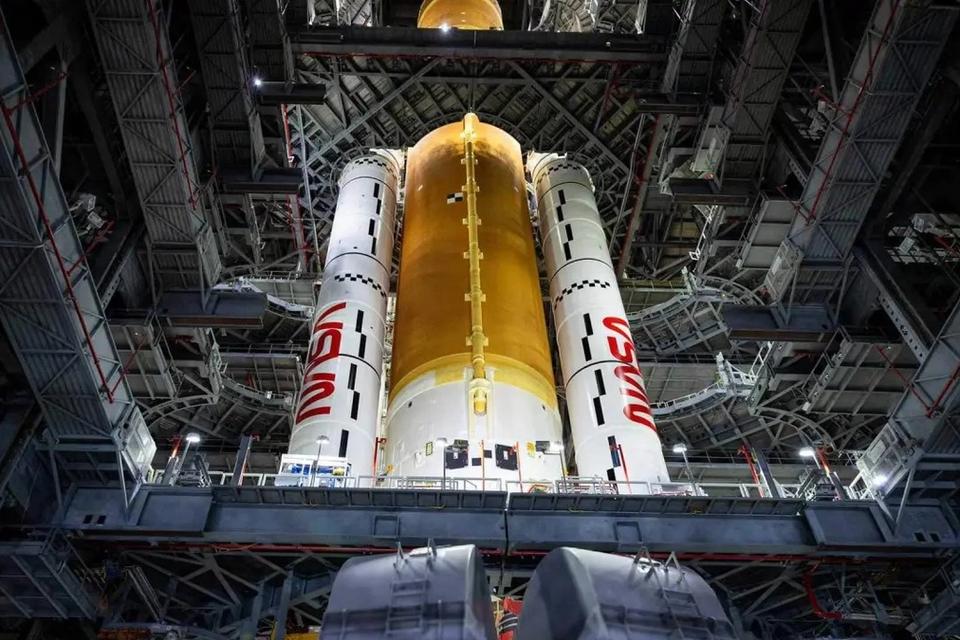

La misión Artemis II devolvió seres humanos a la órbita lunar por primera vez en décadas. Detrás de este hito hay algo más que tecnología: una coalición de 56 países alineados con Estados Unidos frente a un bloque rival liderado por China. Así, la nueva carrera espacial es la primera disputa de bloques del siglo XXI en un territorio donde las reglas todavía no existen. En ese vacío, quien llegue primero no sólo plantará una bandera.
The Artemis II mission returned human beings to lunar orbit for the first time in decades. Behind this milestone lies something more than technology: a coalition of 56 countries aligned with the United States against a rival bloc led by China. Thus, the new space race is the first bloc dispute of the 21st century in a territory where rules do not yet exist. In that vacuum, whoever arrives first will not only plant a flag.
En 2020, la administración Trump declaró que el espacio no es un "bien común global" y lanzó los Acuerdos Artemis: un marco de gobernanza lunar negociado entre Washington y sus aliados, con exclusión de China y Rusia. Su objetivo central es consolidar la interpretación estadounidense sobre la extracción de recursos espaciales como estándar internacional, según la cual dicha extracción "no constituye una apropiación nacional".
En el Tratado del Espacio Exterior este punto constituye una laguna legal: no prohíbe la explotación mineral, pero tampoco la habilita formalmente. Si suficientes países adoptan esa posición, podría consolidarse como derecho consuetudinario favorable a quienes ya tienen industria espacial privada desarrollada. Es clave destacar que durante la administración Biden este consenso se mantuvo, revelando un acuerdo bipartidista en Washington. Artemis II, que completó su vuelo lunar en abril de 2026, es la expresión más visible de esa estrategia. A la fecha, 67 países han firmado los Acuerdos.
China articuló su respuesta en dos frentes. En el plano discursivo, adoptó el lenguaje del "bien común global" que Estados Unidos abandonó (una decisión deliberada que le permite posicionarse como el actor multilateral dispuesto a compartir el espacio, frente a un Washington que persigue su propio interés). Un experto militar chino, ampliamente citado en medios estatales, comparó los Acuerdos Artemis con "los métodos de apropiación de tierras coloniales europeas". En el plano operativo, China lidera la Estación de Investigación Lunar Internacional (ILRS) junto a Rusia, con socios como Pakistán, Egipto y Sudáfrica, y avanza en una campaña diplomática para sumar 50 naciones a su programa lunar para la década de 2030. A diferencia de la NASA, el programa espacial chino opera bajo una doctrina de fusión militar-civil: sus misiones están profundamente integradas con el Ejército Popular de Liberación, lo que le permite sostener planes de décadas sin depender de ciclos presupuestarios ni debates parlamentarios.
La confrontación entre ambos bloques ocurre en un vacío legal que ningún tratado vigente puede llenar. El Tratado del Espacio Exterior de 1967 prohíbe la apropiación nacional de la Luna, pero no establece quién fija las reglas de uso, extracción de recursos o zonas de operación. El espacio se convierte así en un terreno de maniobra estratégica donde cada potencia busca ventajas mediante la interpretación de las normas y la construcción de estándares técnicos. La situación se agrava porque la creación de nuevo derecho espacial está bloqueada: la negociación de nuevos tratados se dificulta por la cantidad de intereses nacionales contrapuestos, y los esfuerzos por generar derecho consuetudinario aún no han producido normas ampliamente aceptadas como vinculantes. El valor estratégico del espacio reside en su capacidad de traducirse en resultados políticos, económicos y militares en la Tierra: quien logre marcar precedentes no operará únicamente en la Luna, sino que definirá los estándares que el resto del mundo deberá adoptar o disputar.
El Tratado de 1967 sobrevivió la Guerra Fría porque ambas superpotencias tenían incentivos para mantenerlo. El escenario actual es estructuralmente distinto: los Acuerdos Artemis son principios no vinculantes negociados por fuera de las Naciones Unidas, mientras el ILRS opera bajo su propia lógica de alianzas, y ninguno de los dos marcos tiene autoridad universal. Artemis enfrenta recortes presupuestarios y sus probabilidades de alunizaje en 2028 se estiman en un 70%. China, en cambio, mantiene un programa sin interrupciones con un alunizaje tripulado previsto para 2030. La Luna es el primer territorio del siglo XXI donde el orden internacional no se negocia entre todos: lo construye quien llega primero y se queda.
In 2020, the Trump administration declared that space is not a "global common" and launched the Artemis Accords: a framework for lunar governance negotiated between Washington and its allies, excluding China and Russia. Its central objective is to consolidate the US interpretation of space resource extraction as the international standard, according to which such extraction "does not constitute national appropriation."
In the Outer Space Treaty, this point constitutes a legal loophole: it does not prohibit mineral exploitation, but it does not formally enable it either. If enough countries adopt that position, it could consolidate as customary law favorable to those who already have a developed private space industry. It is key to note that during the Biden administration this consensus was maintained, revealing a bipartisan agreement in Washington. Artemis II, which completed its lunar flight in April 2026, is the most visible expression of that strategy. To date, 67 countries have signed the Accords.
China articulated its response on two fronts. On the discursive level, it adopted the language of the "global common" that the United States abandoned (a deliberate decision that allows it to position itself as the multilateral actor willing to share space, against a Washington pursuing its own interest). A Chinese military expert, widely cited in state media, compared the Artemis Accords to "the land appropriation methods of European colonialism." On the operational level, China leads the International Lunar Research Station (ILRS) alongside Russia, with partners such as Pakistan, Egypt, and South Africa, and is advancing a diplomatic campaign to add 50 nations to its lunar program by the 2030s. Unlike NASA, the Chinese space program operates under a military-civil fusion doctrine: its missions are deeply integrated with the People's Liberation Army, allowing it to sustain decades-long plans without relying on budgetary cycles or parliamentary debates.
The confrontation between both blocs occurs in a legal vacuum that no current treaty can fill. The Outer Space Treaty of 1967 prohibits the national appropriation of the Moon, but it does not establish who sets the rules of use, resource extraction, or operational zones. Space thus becomes a ground for strategic maneuvering where each power seeks advantages through the interpretation of rules and the building of technical standards. The situation is aggravated because the creation of new space law is blocked: the negotiation of new treaties is hindered by the number of conflicting national interests, and efforts to generate customary law have not yet produced rules widely accepted as binding. The strategic value of space resides in its capacity to translate into political, economic, and military results on Earth: whoever manages to set precedents will not operate solely on the Moon, but will define the standards that the rest of the world must adopt or dispute.
The 1967 Treaty survived the Cold War because both superpowers had incentives to maintain it. The current scenario is structurally different: the Artemis Accords are non-binding principles negotiated outside the United Nations, while the ILRS operates under its own logic of alliances, and neither framework has universal authority. Artemis faces budget cuts, and its probability of a moon landing in 2028 is estimated at 70%. China, on the other hand, maintains an uninterrupted program with a manned moon landing scheduled for 2030. The Moon is the first territory of the 21st century where the international order is not negotiated among all: it is built by whoever arrives first and stays.
Artículos relacionados
Related articles

El potencial argentino en la cadena del litio
Value addition in the lithium chain: Argentina's great potential

Tecnologías críticas y competencia global: ¿qué lugar ocupa Argentina?
Critical technologies and global competition: where does Argentina stand?