La ONU frente a su crisis de legitimidad: ¿reforma o disolución?
The UN Faced with Its Crisis of Legitimacy: reform or dissolution?

A 80 años de la fundación de la ONU, el sistema atraviesa una crisis de legitimidad y eficacia. Las dificultades de financiamiento, las críticas por ineficiencia y la falta de representatividad ponen en duda su capacidad para cumplir su propósito central de preservar la paz y la seguridad internacionales. El futuro de la organización parece condicionado a una transformación profunda. Así, la cuestión central es si la ONU logrará adaptarse a las nuevas dinámicas del poder global y recuperar su capacidad para garantizar la paz, o si quedará reducida a un actor cada vez más irrelevante frente a los conflictos internacionales.
Eighty years after the founding of the UN, the system is going through a crisis of legitimacy and effectiveness. Financing difficulties, criticisms regarding inefficiency, and a lack of representativeness cast doubt on its ability to fulfill its core purpose of preserving international peace and security. The future of the organization seems conditioned upon a profound transformation. Thus, the central question is whether the UN will manage to adapt to the new dynamics of global power and recover its capacity to guarantee peace, or if it will be reduced to an increasingly irrelevant actor in the face of international conflicts.
En un contexto internacional marcado por la proliferación de conflictos regionales, la competencia entre grandes potencias y el debilitamiento de las normas multilaterales, la ONU atraviesa una de sus crisis institucionales más profundas desde el final de la Guerra Fría. Este ha sido el resultado de su debilitamiento en su capacidad para actuar como foro efectivo de mediación colectiva se encuentra disminuida. En este escenario, se pone en cuestión su autoridad política como principal plataforma internacional para la gestión cooperativa de la paz y la seguridad. Frente a estas tensiones estructurales, el debate sobre la necesidad de modernizar el funcionamiento de la organización adquiere especial urgencia.
UN80
En marzo de 2025, el Secretario General António Guterres presentó la iniciativa UN80. Se trata de un programa de reformas institucionales concebido para adaptar el sistema de Naciones Unidas a los desafíos políticos y humanitarios del siglo XXI. La propuesta busca construir una organización más ágil, integrada y capaz de responder de manera coordinada a crisis globales cada vez más complejas.
La iniciativa UN80 propone fortalecer la eficiencia administrativa mediante la consolidación de estructuras de liderazgo, la simplificación de procesos burocráticos y una mayor integración entre las distintas agencias del sistema. Entre las medidas consideradas se incluyen la reorganización de los equipos nacionales de la ONU, la creación de plataformas administrativas compartidas y la relocalización de funciones hacia sedes operativas con menores costos estructurales. Asimismo, la iniciativa contempla reforzar la arquitectura humanitaria del sistema mediante mecanismos de coordinación más simples y el desarrollo de plataformas de conocimiento que permitan aprovechar mejor la experiencia acumulada dentro del sistema.
Una parte central de estas reformas se orienta a racionalizar el funcionamiento administrativo de la ONU con el objetivo de optimizar el uso de recursos financieros limitados. El rediseño institucional incluye estructuras de liderazgo más compactas, un apoyo consolidado a las iniciativas de construcción de paz y operaciones de mantenimiento de la paz más interconectadas dentro del sistema. De igual modo, se prevé una mayor alineación de los esfuerzos del sistema en materia de derechos humanos mediante la creación de mecanismos institucionales que permitan coordinar mejor las acciones existentes.
El énfasis en la eficiencia administrativa responde en gran medida al desafío presupuestario que enfrenta actualmente la organización y que amenaza con limitar su capacidad operativa en múltiples áreas de acción. La crisis financiera se ha profundizado en los últimos años debido a retrasos en el pago de contribuciones obligatorias, reducciones presupuestarias y el creciente endeudamiento acumulado por varios Estados miembros. En particular, la negativa de algunos países a aportar la totalidad de sus contribuciones ha generado tensiones presupuestarias que afectan directamente el funcionamiento cotidiano del sistema.
Resolver la cuestión financiera se ha convertido en una condición indispensable para asegurar la continuidad institucional de la ONU y la sostenibilidad de sus operaciones humanitarias y de desarrollo. Por esta razón, buena parte del debate actual sobre el futuro de la organización se concentra en identificar mecanismos que permitan reforzar la base financiera del sistema multilateral. Sin embargo, el propósito central de este artículo no es analizar en profundidad la arquitectura financiera de la organización, sino examinar los desafíos políticos estructurales que condicionan hoy su capacidad de acción.
Las reformas administrativas pueden mejorar la eficiencia institucional, pero difícilmente resolverán por sí solas las tensiones estructurales que limitan la capacidad de acción colectiva dentro del sistema. En este sentido, el debate sobre el futuro de la ONU exige abordar también las dinámicas de poder que condicionan el funcionamiento de sus órganos principales.
El Consejo de Seguridad
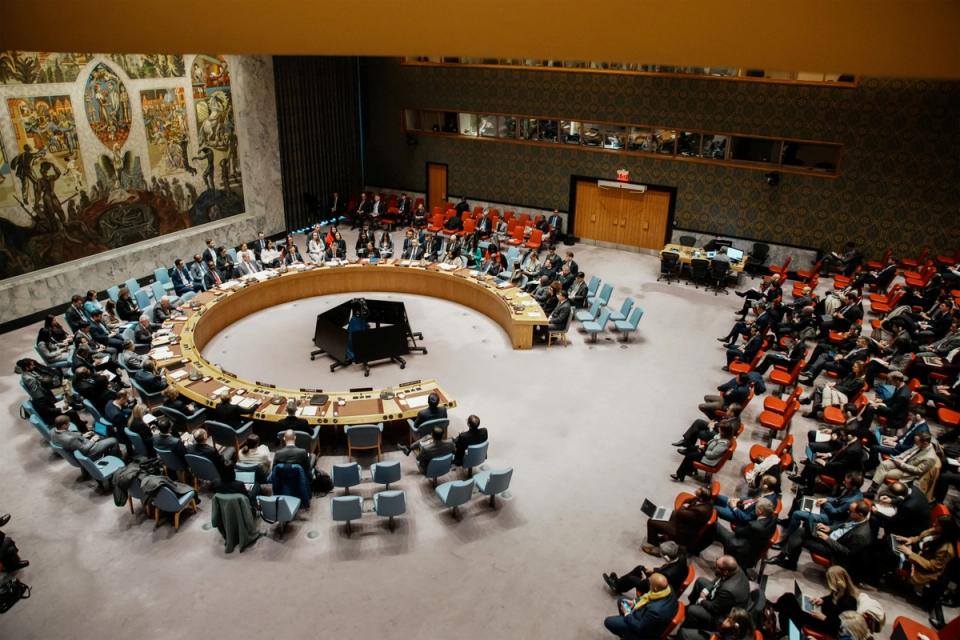
Uno de los síntomas más visibles de estas dinámicas es el creciente bloqueo del Consejo de Seguridad, donde el uso reiterado del veto ha dificultado la adopción de respuestas coordinadas frente a crisis internacionales. Las rivalidades estratégicas entre Estados Unidos, Rusia y China han paralizado numerosas iniciativas, debilitando la capacidad del Consejo para cumplir su función central de preservar la paz internacional. Como consecuencia, muchos conflictos recientes han sido abordados mediante mecanismos bilaterales o regionales que han desplazado parcialmente a la ONU de los espacios donde históricamente ejercía liderazgo político. Las divisiones estratégicas entre los cinco permanentes han producido un patrón recurrente de vetos cruzados que bloquea la adopción de resoluciones incluso frente a crisis humanitarias de gran magnitud. Este bloqueo institucional ha debilitado la credibilidad del Consejo de Seguridad como instrumento efectivo para la prevención de conflictos y la gestión de crisis internacionales.
El Consejo de Seguridad continúa reflejando además una correlación de poder heredada de 1945 que ya no corresponde con la distribución actual de influencia económica y demográfica en el sistema internacional. Las demandas de reforma destinadas a ampliar la representación de economías emergentes y del llamado Sur Global han encontrado reiteradamente resistencia por parte de las potencias que detentan privilegios institucionales. Dado el contexto, cabría considerar una ampliación de la composición del Consejo de Seguridad para incorporar nuevos miembros permanentes, incluyendo a varias de las principales economías representadas actualmente en el G20, y revisar las reglas de votación para limitar el uso del veto que hoy paraliza su funcionamiento.
El rol del Secretario General
A estas limitaciones se suma la progresiva pérdida de peso político de la Secretaría Generalen la conducción de iniciativas diplomáticas y en la coordinación de la acción humanitaria internacional. En lugar de consolidarse como centro operativo del sistema, la Secretaría ha adoptado en los últimos años una postura cautelosa que privilegia la deferencia hacia los Estados miembros. Esta dinámica ha contribuido a generar una percepción de inmovilismo institucional que limita la capacidad de la organización para responder con rapidez a crisis complejas. Fortalecer el papel político del Secretario General constituye por lo tanto una dimensión esencial de cualquier estrategia orientada a revitalizar la relevancia del sistema multilateral contemporáneo. Dotar a esta figura de mayores capacidades de iniciativa permitiría reforzar la capacidad de la organización para intervenir en etapas tempranas de las crisis antes de que escalen hacia conflictos abiertos. Un liderazgo más activo también podría contribuir a restaurar la autoridad moral de la ONU en un momento caracterizado por la fragmentación del orden internacional.
¿Qué ONU queremos?
La crisis actual de la organización no es únicamente administrativa ni financiera, sino también política. Sin una revisión del funcionamiento del Consejo de Seguridad y sin un fortalecimiento real de las capacidades de iniciativa del Secretario General, las reformas administrativas difícilmente podrán restaurar la eficacia del sistema. La adaptación de la ONU a las realidades del siglo XXI exige abordar directamente estas limitaciones estructurales. De esta manera, la relevancia futura de la organización dependerá de su capacidad para reformar sus principales órganos de decisión y recuperar un papel más activo en la gestión colectiva de las crisis internacionales.
In an international context marked by the proliferation of regional conflicts, competition among great powers, and the weakening of multilateral norms, the UN is going through one of its deepest institutional crises since the end of the Cold War. This has been the result of a decline in its capacity to act as an effective forum for collective mediation, which currently stands diminished. In this scenario, its political authority as the primary international platform for the cooperative management of peace and security is being questioned. Faced with these structural tensions, the debate on the need to modernize the functioning of the organization acquires special urgency.
UN80
In March 2025, Secretary-General António Guterres presented the UN80 initiative. This is a program of institutional reforms designed to adapt the United Nations system to the political and humanitarian challenges of the 21st century. The proposal seeks to build a more agile, integrated organization capable of responding in a coordinated manner to increasingly complex global crises.
The UN80 initiative proposes to strengthen administrative efficiency through the consolidation of leadership structures, the simplification of bureaucratic processes, and greater integration among the different agencies of the system. Among the measures considered are the reorganization of UN country teams, the creation of shared administrative platforms, and the relocation of functions toward operational headquarters with lower structural costs. Likewise, the initiative contemplates reinforcing the system's humanitarian architecture through simpler coordination mechanisms and the development of knowledge platforms to better leverage the experience accumulated within the system.
A central part of these reforms is aimed at streamlining the UN's administrative functioning to optimize the use of limited financial resources. The institutional redesign includes more compact leadership structures, consolidated support for peacebuilding initiatives, and peacekeeping operations that are more interconnected within the system. Similarly, greater alignment of the system's human rights efforts is envisioned through the creation of institutional mechanisms to better coordinate existing actions.
The emphasis on administrative efficiency responds largely to the budgetary challenge currently facing the organization, which threatens to limit its operational capacity across multiple areas of action. The financial crisis has deepened in recent years due to delays in the payment of mandatory contributions, budget cuts, and the growing accumulated debt of several Member States. In particular, the refusal of some countries to provide the entirety of their contributions has generated budgetary strains that directly affect the daily functioning of the system.
Resolving the financial issue has become an indispensable condition to ensure the UN's institutional continuity and the sustainability of its humanitarian and development operations. For this reason, much of the current debate on the future of the organization concentrates on identifying mechanisms to reinforce the financial base of the multilateral system. However, the central purpose of this article is not to analyze the organization's financial architecture in depth, but to examine the structural political challenges that condition its capacity for action today.
Administrative reforms may improve institutional efficiency, but they will hardly resolve on their own the structural tensions that limit the capacity for collective action within the system. In this sense, the debate on the future of the UN also demands addressing the power dynamics that condition the functioning of its principal organs.
The Security Council
One of the most visible symptoms of these dynamics is the growing gridlock within the Security Council, where the repeated use of the veto has hindered the adoption of coordinated responses to international crises. Strategic rivalries among the United States, Russia, and China have paralyzed numerous initiatives, weakening the Council's capacity to fulfill its core function of preserving international peace. As a consequence, many recent conflicts have been addressed through bilateral or regional mechanisms, partially displacing the UN from the arenas where it historically exercised political leadership. Strategic divisions among the permanent five have produced a recurring pattern of cross-vetoes that blocks the adoption of resolutions even in the face of major humanitarian crises. This institutional deadlock has weakened the credibility of the Security Council as an effective instrument for conflict prevention and international crisis management.
Furthermore, the Security Council continues to reflect a correlation of power inherited from 1945 that no longer corresponds to the current distribution of economic and demographic influence in the international system. Demands for reform aimed at expanding the representation of emerging economies and the so-called Global South have repeatedly encountered resistance from the powers holding institutional privileges. Given the context, it would be worth considering an expansion of the Security Council's composition to incorporate new permanent members, including several of the main economies currently represented in the G20, and reviewing voting rules to limit the use of the veto that currently paralyzes its functioning.
The Role of the Secretary-General
Added to these limitations is the progressive loss of political weight by the Secretariat-General in leading diplomatic initiatives and coordinating international humanitarian action. Instead of consolidating itself as the operational center of the system, the Secretariat has adopted a cautious stance in recent years that privileges deference toward Member States. This dynamic has contributed to a perception of institutional stagnation that limits the organization's ability to respond quickly to complex crises. Strengthening the political role of the Secretary-General therefore constitutes an essential dimension of any strategy aimed at revitalizing the relevance of the contemporary multilateral system. Equipping this figure with greater capacities for initiative would reinforce the organization's capacity to intervene in the early stages of crises before they escalate into open conflicts. A more active leadership could also contribute to restoring the UN's moral authority at a time characterized by the fragmentation of the international order.
What UN Do We Want?
The organization's current crisis is not solely administrative or financial, but also political. Without a revision of the Security Council's functioning and a real strengthening of the Secretary-General's capacities for initiative, administrative reforms will hardly be able to restore the system's effectiveness. Adapting the UN to the realities of the 21st century requires directly addressing these structural limitations. Thus, the future relevance of the organization will depend on its capacity to reform its main decision-making bodies and reclaim a more active role in the collective management of international crises.
Artículos relacionados
Related articles
América Latina vuelve al tablero: por qué Estados Unidos volvió a pensar la región como prioridad
Latin America Returns to the Board: Why the United States Has Once Again Made the Region a Priority

¿Cómo financiamos una América Latina sostenible?
How could we finance a sustainable Latin America?