Nuevas formas de militancia
New forms of militancy
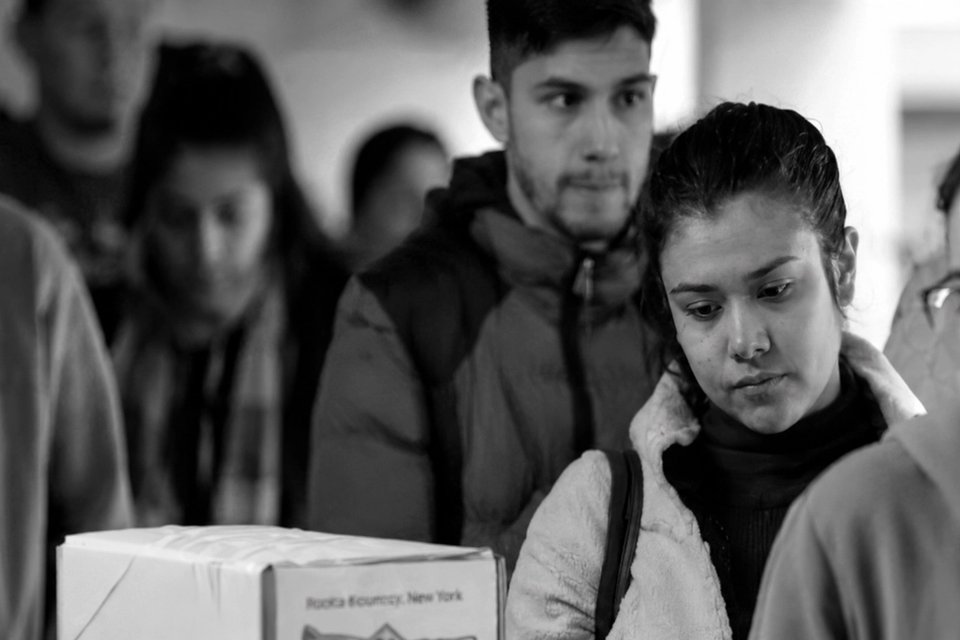

Durante décadas, el compromiso político juvenil fue sinónimo de pertenencia partidaria, actos masivos y agrupaciones que encontraban su fuerza en la territorialidad. Hoy, ese paradigma parece resquebrajarse. Lejos de los comités, las unidades básicas o las reuniones sindicales, las juventudes se organizan de otra manera. A primera vista podría parecer apatía, pero no lo es: es una redefinición.
For decades, youth political commitment was synonymous with party membership, mass events, and groups that found their strength in territoriality. Today, that paradigm seems to be cracking. Far from the committees, the local party units, or union meetings, youth are organizing in a different way. At first glance, it might look like apathy, but it is not: it is a redefinition.
Durante décadas, el compromiso político juvenil fue sinónimo de pertenencia partidaria, actos masivos y agrupaciones que encontraban su fuerza en la territorialidad. Hoy, ese paradigma parece resquebrajarse. Lejos de los comités, las unidades básicas o las reuniones sindicales, las juventudes se organizan de otra manera. A primera vista podría parecer apatía, pero no lo es: es una redefinición.
Las juventudes siguen participando, solo que ya no siempre lo hacen desde las estructuras clásicas. Las redes sociales se convirtieron en trincheras discursivas, los colectivos temáticos reemplazaron a los frentes, y la identidad política ya no necesita del carnet de afiliación. Se milita desde la virtualidad, se participa con una historia de Instagram, se construye sentido desde una campaña de change.org o un hilo de Twitter. Este cambio de escenario genera incomodidad en los espacios tradicionales, que oscilan entre la apropiación estratégica y la subestimación de este nuevo lenguaje.
A su vez, hay un agotamiento visible frente a una clase política que parece hablar otro idioma. No es casual que muchos jóvenes descreen del voto como herramienta de transformación o que, incluso, encuentren en el escepticismo una nueva forma de crítica. El desinterés no siempre es desinformación: a veces es hartazgo. La pregunta es si los partidos están dispuestos a reformularse para integrar esas nuevas formas de hacer política, o si seguirán viendo a las juventudes como “semilleros” sin voz real en las decisiones.
La política tradicional, con sus liturgias y jerarquías, muchas veces asfixia. El verticalismo no dialoga con una generación que demanda horizontalidad, escucha y flexibilidad. Mientras tanto, crecen los espacios híbridos donde se mezcla lo territorial con lo digital, lo formal con lo espontáneo. Tal vez el desafío no sea volver a enamorar a los jóvenes de la política, sino entender que esa política ya cambió, y ellos, hace rato, la están haciendo a su manera.
Nuevos lenguajes, causas y disputas simbólicas
La política entre jóvenes hoy no solo se dice de otra manera, también se hace en otras coordenadas. Los lenguajes cambian, mutan, se digitalizan. Pero ¿cuánto de eso representa una transformación real de la acción política? ¿Y cuánto es solo forma sin fondo, un juego de pertenencias, memes y slogans que agotan su potencia en la pantalla?
En el mapa actual, no hay una única juventud ni una única forma de militancia. Conviven expresiones disidentes, redes de activismo ambiental o feminista, influencers con discurso político, y también jóvenes que abrazan discursos conservadores, meritocráticos o directamente reaccionarios. La política no es patrimonio de la izquierda: en la era del algoritmo, el deseo de orden, de mano dura o de volver a una supuesta normalidad también convoca juventudes. El voto joven en Argentina ha acompañado tanto expresiones progresistas como proyectos libertarios, y eso obliga a dejar de romantizar a la juventud como sujeto revolucionario por naturaleza.
Las redes sociales, espacio privilegiado de expresión juvenil, funcionan como escenario de visibilidad, pero también de banalización. La viralidad puede darle impulso a una causa o reducirla a una tendencia pasajera. Muchas veces, el riesgo está en que el discurso político quede encapsulado en performances sin continuidad: una story, una consigna ingeniosa, un filtro con mensaje. El lenguaje se convierte en una marca, una identidad más que en una práctica sostenida.
Además, aunque se hable de horizontalidad y nuevas formas de organización, no todas las voces jóvenes tienen la misma llegada. Hay barreras materiales, geográficas y simbólicas: no es lo mismo militar desde un barrio sin conectividad que desde una universidad pública del centro porteño. No todos los lenguajes circulan con la misma legitimidad ni todas las causas encuentran eco.
Restan algunas preguntas: ¿hasta qué punto estas nuevas formas representan un quiebre en las lógicas de la política tradicional? ¿Y hasta qué punto son incorporadas por el sistema sin incomodar, recicladas como marketing o utilizadas estratégicamente sin ceder poder real?
For decades, youth political commitment was synonymous with party membership, mass events, and groups that found their strength in territoriality. Today, that paradigm seems to be cracking. Far from the committees, the local party units, or union meetings, youth are organizing in a different way. At first glance, it might look like apathy, but it is not: it is a redefinition.
Youth continue to participate, only they no longer always do so from classical structures. Social networks have become discursive trenches, thematic collectives have replaced fronts, and political identity no longer needs a membership card. Militancy happens from virtuality, participation happens with an Instagram story, and meaning is constructed from a change.org campaign or a Twitter thread. This change of scene generates discomfort in traditional spaces, which oscillate between strategic appropriation and the underestimation of this new language.
At the same time, there is visible exhaustion in the face of a political class that seems to speak another language. It is no coincidence that many young people disbelieve in the vote as a tool for transformation or that, even, they find a new form of criticism in skepticism. Disinterest is not always misinformation: sometimes it is fed-up-ness. The question is whether parties are willing to reformulate themselves to integrate those new ways of doing politics, or if they will continue to see youth as "seedbeds" without a real voice in decisions.
Traditional politics, with its liturgies and hierarchies, often suffocates. Verticalism does not dialogue with a generation that demands horizontality, listening, and flexibility. Meanwhile, hybrid spaces are growing where the territorial is mixed with the digital, the formal with the spontaneous. Perhaps the challenge is not to make young people fall in love with politics again, but to understand that politics has already changed, and they have been doing it their way for a long time.
New languages, causes, and symbolic disputes
Politics among youth today is not only spoken differently, it is also done in other coordinates. Languages change, mutate, go digital. But how much of that represents a real transformation of political action? And how much is only form without substance, a game of belongings, memes, and slogans that exhaust their potential on the screen?
On the current map, there is no single youth nor a single form of militancy. Dissident expressions, environmental or feminist activism networks, influencers with political discourse coexist, and also young people who embrace conservative, meritocratic, or directly reactionary discourses. Politics is not the heritage of the left: in the era of the algorithm, the desire for order, for a firm hand, or to return to a supposed normality also summons youth. The youth vote in Argentina has accompanied both progressive expressions and libertarian projects, and that forces us to stop romanticizing youth as a revolutionary subject by nature.
Social networks, a privileged space for youth expression, function as a stage for visibility, but also for trivialization. Virality can give momentum to a cause or reduce it to a passing trend. Often, the risk is that political discourse remains encapsulated in performances without continuity: a story, a witty slogan, a filter with a message. Language becomes a brand, an identity rather than a sustained practice.
Furthermore, although there is talk of horizontality and new forms of organization, not all young voices have the same reach. There are material, geographical, and symbolic barriers: it is not the same to militate from a neighborhood without connectivity as from a public university in the center of Buenos Aires. Not all languages circulate with the same legitimacy nor do all causes find an echo.
Some questions remain: to what extent do these new forms represent a break in the logic of traditional politics? And to what extent are they incorporated by the system without discomfort, recycled as marketing, or used strategically without ceding real power?
Artículos relacionados
Related articles
Paradiplomacia y nuevas formas de inserción internacional en Argentina
Paradiplomacy and new forms of international insertion in Argentina
Mayor paridad política, ¿más beneficios para las mujeres?
More Political Parity, More Benefits for Women?