¿Por qué importa el Ártico?
Why Does the Arctic Matter?
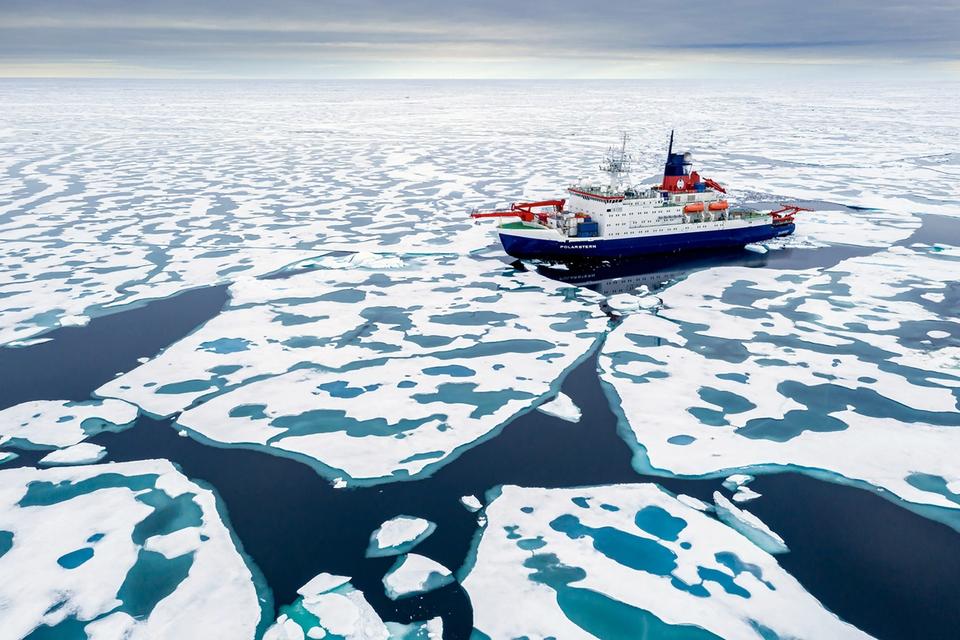
El cambio climático ha acarreado una serie de cambios drásticos en el planeta, entre ellos el progresivo deshielo del Ártico. Lejos de generar alerta, el suceso presenta una nueva oportunidad en la geopolítica de los Estados del norte global.
Climate change has brought a series of drastic changes to the planet, including the progressive melting of the Arctic. Far from generating alarm, this event presents a new opportunity in the geopolitics of the States of the Global North.
Difícilmente podría pensarse que algo bueno puede salir como consecuencia del avance del cambio climático. Sin embargo, el descongelamiento de los bloques de hielo del Ártico podría generar una nueva oportunidad geopolítica para los Estados aledaños: el deshielo ha despejado el Paso del Noroeste, una ruta marítima que podría unir a Europa con Asia cruzando la región ártica, en específico las aguas que bordean las costas de Groenlandia y Canadá.
Se trata de un tramo marino descubierto hace años, con las primeras expediciones de exploración ártica. Sin embargo el hielo, la complejidad de la marea y el ventoso clima de la región desincentivó que se consolide como una ruta marítima principal. Ahora, gracias al deshielo progresivo, ha ganado la atención de países como Estados Unidos, que bajo el segundo mandato de Trump declaró sus intenciones de tomar el control de Groenlandia. No es la única potencia con aspiraciones árticas: Rusia y China también mostraron su entusiasmo por una posible activación del Paso del Noroeste.
Rutas y algo más
No es de extrañar el interés generalizado: el Paso del Noroeste reduciría los tiempos de transporte a una o dos semanas, conectando a Asia con Europa en menos tiempo que el Canal de Suez. Esta posible ventaja logística resulta fundamental para las potencias en la actualidad, en tanto las tensiones en materia comercial no dejan de crecer y los Estados buscan superarse mutuamente. No obstante, hay un problema.
No cualquier barco puede navegar las aguas del Ártico. Si bien el hielo va disminuyendo, sigue estando ahí. Conforme a un experto de la región, la zona solo es navegable por pocos meses al año, y es indispensable el uso de barcos rompehielos para lograrlo. A nivel mundial, Rusia lidera la lista de países poseedores de rompehielos con una cantidad estimada de 50 embarcaciones, lo que pone en desventaja al resto de países interesados, no solo en materia comercial, sino de seguridad. Por su parte Dinamarca, que se encarga de los asuntos exteriores y de seguridad de Groenlandia, no tiene en su haber ningún rompehielo para proteger a la isla que se ha vuelto el foco de atención de Estados Unidos, que busca tener bajo su esfera de influencia (y no bajo la rusa) los quehaceres de la región.
Fue el realista Hans Morgenthau (1986) quien destacó a la geografía como un elemento vital del poder. Cuanto más amplio sea el territorio de un Estado, más seguro será. Sin embargo, siempre se corre el riesgo de perder terreno a manos de invasiones de otros Estados, lo que supone una decaída en la moral nacional y, por tal motivo, es necesario evitarlo. El mejor ejemplo lo está dando Canadá, que en el último tiempo ha extremado medidas para reforzar su presencia en las costas que dan a la región ártica, tanto para asistir accidentes en zonas lejanas como para prevenir intrusiones ilegales en territorio canadiense. La ilegalidad no se refiere sólo a las costas: Canadá declara como aguas internas de su Estado a gran parte del Paso del Noroeste.
Pero otro elemento vital que reconoció Morgenthau eran los recursos naturales. Y la región posee muchos, ahora finalmente accesibles gracias al deshielo. Principalmente en Groenlandia, nación constituyente del Reino de Dinamarca, destaca la presencia de níquel, hierro, y las llamadas “tierras raras” en las profundidades de su suelo. Se trata de materiales indispensables para el desarrollo de tecnología relacionada a la energía renovable, como los autos eléctricos. Groenlandia posee una economía pequeña, centrada alrededor de la pesca y sus derivados, y depende en gran medida de Dinamarca para ayudas sociales. Es por esto que la atención que ha cobrado la región podría serle de utilidad para negociar mejores prestaciones con el gobierno danés, o bien para iniciar la transición hacia la independencia, tan anhelada por sus habitantes nativos.
It could hardly be thought that anything good could come as a consequence of advancing climate change. However, the melting of the Arctic ice blocks could generate a new geopolitical opportunity for surrounding States: the thaw has cleared the Northwest Passage, a maritime route that could connect Europe with Asia by crossing the Arctic region—specifically the waters bordering the coasts of Greenland and Canada.
This is a marine stretch discovered years ago during the first Arctic exploration expeditions. However, the ice, the complexity of the tide, and the region's windy weather discouraged it from consolidating as a primary maritime route. Now, thanks to progressive melting, it has gained the attention of countries like the United States, which under Trump's second term declared its intentions to take control of Greenland. It is not the only power with Arctic aspirations: Russia and China have also shown enthusiasm for a potential activation of the Northwest Passage.
Routes and Something More
The generalized interest is not surprising: the Northwest Passage would reduce transportation times to one or two weeks, connecting Asia with Europe in less time than the Suez Canal. This potential logistical advantage is fundamental for powers today, as trade tensions continue to grow and States seek to outperform one another. However, there is a problem.
Not just any ship can navigate Arctic waters. Although the ice is diminishing, it is still there. According to an expert on the region, the zone is only navigable for a few months a year, and the use of icebreaker ships is indispensable to achieve it. Globally, Russia leads the list of icebreaker-owning countries with an estimated 50 vessels, placing the rest of the interested countries at a disadvantage—not only in commercial matters but also in terms of security. For its part, Denmark, which handles Greenland's foreign and security affairs, does not possess a single icebreaker to protect the island that has become the focus of attention for the United States, which seeks to keep the region's affairs within its sphere of influence (and not Russia's).
It was the realist Hans Morgenthau (1986) who highlighted geography as a vital element of power. The larger a State's territory, the more secure it will be. However, there is always a risk of losing ground to invasions by other States, which implies a decay in national morale and must therefore be avoided. The best example is being set by Canada, which in recent times has taken extreme measures to reinforce its presence on the coasts facing the Arctic region, both to assist with accidents in remote areas and to prevent illegal intrusions into Canadian territory. Illegality does not only refer to the coastlines: Canada declares a large part of the Northwest Passage as its State's internal waters.
But another vital element recognized by Morgenthau was natural resources. And the region possesses many, now finally accessible thanks to the thaw. Mainly in Greenland, a constituent nation of the Kingdom of Denmark, the presence of nickel, iron, and the so-called "rare earths" stands out deep within its soil. These are indispensable materials for the development of technology related to renewable energy, such as electric cars. Greenland has a small economy centered around fishing and its derivatives, and it relies heavily on Denmark for social aid. This is why the attention the region has gathered could be useful for negotiating better benefits with the Danish government, or else to initiate the transition toward independence, so deeply yearned for by its native inhabitants.
Artículos relacionados
Related articles
América Latina vuelve al tablero: por qué Estados Unidos volvió a pensar la región como prioridad
Latin America Returns to the Board: Why the United States Has Once Again Made the Region a Priority

¿Cómo financiamos una América Latina sostenible?
How could we finance a sustainable Latin America?