Un conflicto ignorado: la guerra civil en Sudán
An Ignored Conflict: The Civil War in Sudan
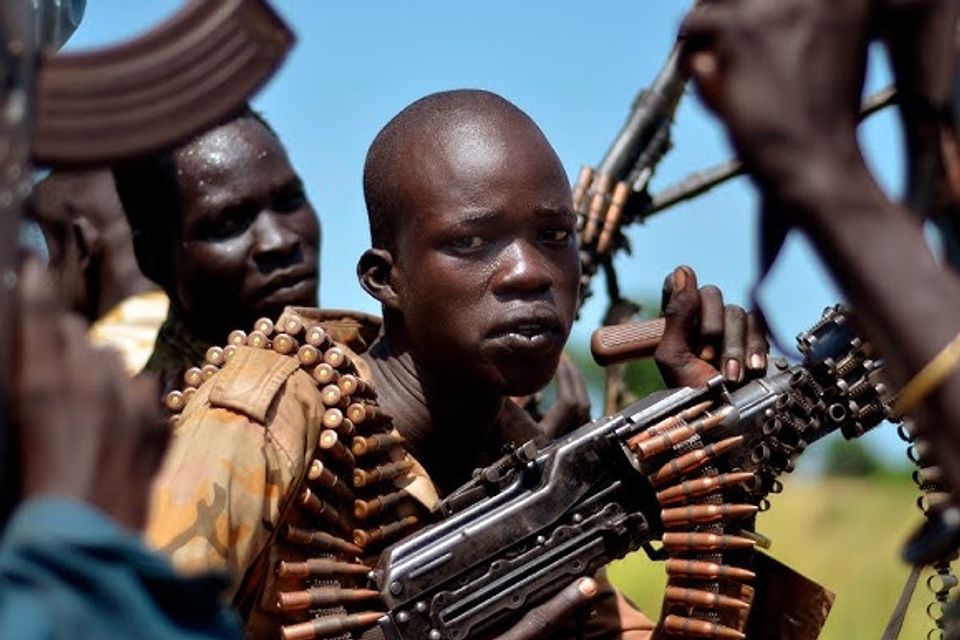
En abril de 2023 estalló una guerra civil en Sudán tras décadas de intentos fallidos de democracia partidaria y golpes de Estado. El poder se disputa entre Abdel Fattah al-Burhan, jefe del Ejército, y Hemedti, líder de las RSF (Rapid Support Forces). Aunque en 2021 ambos sectores se unieron en un golpe militar, la alianza se quebró y derivó en un conflicto que involucra también a actores externos interesados en los recursos del país. La crisis humanitaria resultante es de las peores en décadas: 12 millones de desplazados y unos 25 millones de personas en inseguridad alimentaria.
In April 2023, a civil war broke out in Sudan after decades of failed attempts at party democracy and coups d'état. Power is disputed between Abdel Fattah al-Burhan, head of the Army, and Hemedti, leader of the RSF (Rapid Support Forces). Although both sectors united in a military coup in 2021, the alliance shattered and led to a conflict that also involves external actors interested in the country's resources. The resulting humanitarian crisis is one of the worst in decades: 12 million displaced persons and around 25 million people facing food insecurity.
Sudán fue una nación fragmentada desde su concepción. En la época colonial, Inglaterra y Egipto mantenían una administración conjunta sobre este territorio, ideada para sacarle rédito a los recursos naturales y sin preocupación alguna por las diferencias étnicas y poblacionales de la región.
Tras el derrocamiento de la monarquía egipcia producido por la Revolución de 1952, el gobierno de Gamal Abdel Nasser comenzó a ejercer presión para que Sudán obtenga su independencia. Para 1956, se habían liberado del dominio colonial, pero se encontraron con un territorio plagado de inestabilidad y de conflictos tribales. Sudán surgió de la herencia del dominio colonial, y, debido a las condiciones impuestas por los poderes coloniales, su futuro estaba condicionado. En las décadas sucesivas a su independencia, Sudán sufrió 20 golpes de Estado, una Guerra Civil en la región de Darfour y, en 2011, la emergencia de Sudán del Sur.
La aparición de esta nueva nación se dio tras una prolongada lucha legislativa. El sur del país es en su mayoría cristiano, y su perfil étnico se compone de diferentes pueblos provenientes del África Subsahariana. En contraposición, en el norte prevalecen pueblos árabes. El objetivo principal de la separación fue lograr un tan ansiado respeto por las diferencias religiosas y culturales, además de conseguir salir de la esfera y de la hegemonía de Khartoum, capital y centro económico del país.
Separatismo en Darfour: ¿visión concreta o apuesta para llegar al poder?
La región de Darfour, que también goza de marcadas diferencias culturales con el norte debido a sus raíces bereberes, no pudo obtener su independencia. Fue a partir de este fracaso que surgió la figura de Hemedti y sus RSF, que, apoyadas por Rusia y por los Emiratos Árabes Unidos, comenzaron una campaña armada bajo el pretexto del separatismo. Sin embargo, observadores internacionales sugieren que estos generales dejaron las diferencias étnicas y culturales en un segundo plano. Se apropiaron de la lucha y la llevaron hacia una disputa por el poder entre dos figuras centrales en la política sudanesa, que en algún momento habían actuado en conjunto para derrocar al gobierno de turno.
Diversas potencias han intentado aprovecharse de la situación de Sudán. El auspiciante más explícito de las RSF, los Emiratos Árabes Unidos, se posicionó como proveedor de drones y de armamento militar moderno a cambio del acceso a numerosos depósitos de oro. Otro actor involucrado con este grupo es Rusia, a través de su notorio grupo de mercenarios, Wagner Group. Este grupo, si bien privado pero controlado por el Kremlin, lleva años sometiendo a Estados africanos a relaciones de dependencia con el fin de proveerles una tan ansiada seguridad frente a la violencia facciosa. Todo indicaría que las RSF, integradas en parte por mercenarios y agentes foráneos, tienen como objetivo tomar el poder, y están dispuestos a vender los recursos naturales del país para obtener el financiamiento para su campaña.
Wagner también está tras el oro en Sudán, y las RSF están dispuestas a cederlo si le facilitan el ascenso al poder. El gobierno sudanés está intentando poner un freno a estas operaciones, evidentemente, sin mucho éxito. El país, ya afectado por la guerra y la crisis humanitaria, se está quedando también sin recursos naturales y sin proyección a futuro.
Conflicto y crisis humanitaria
Con la guerra civil llegó una de las peores crisis humanitarias del siglo XXI, y una que está siendo gravemente ignorada. Human Rights Watch sugiere que ambas partes, tanto el ejército como las RSF, han cometido crímenes de guerra, entre ellos el asesinato y la violación de civiles. Observadores de este grupo descubrieron que las RSF están tomando prisioneras a niños menores de edad y forzándolos a convertirse en esclavos sexuales. Si bien tribunales como la CIJ (Corte Internacional de Justicia) identificaron los crímenes y se propusieron procesarlos, es una realidad la dificultad que impone detener a los perpetradores, de los cuales gran parte quedará impune.
Por otro lado, la situación alimentaria es igual de preocupante. El World Food Programme (WFP) confirmó una situación de hambruna generalizada en 2024, y sugiere que casi 25 millones de personas se encuentran en situación de inseguridad alimentaria. A pesar de las enormes dificultades que presenta el acceso de alimentos y de servicios básicos al país, y pese al descuido de la situación en Sudán por parte de las grandes potencias, organizaciones como UNICEF y WFP siguen haciendo lo posible por ayudar a la población civil.
Los síntomas de la guerra
La guerra está terminando de destruir a Sudán. Este conflicto, a diferencia de la Guerra en Ucrania o de la Guerra en Gaza, no está recibiendo la cobertura mediática necesaria en occidente. Así, una de las crisis humanitarias más agudas de los últimos tiempos está siendo ignorada por gran parte de la población mundial. En un mundo donde los conflictos armados y las violaciones de derechos humanos son cada vez más frecuentes, seguir ignorando estos conflictos va a lograr que la guerra se consolide como una manera legítima de hacer política, si es que aún no es vista como tal.
Organismos relacionados con las Naciones Unidas están haciendo todo lo posible por ayudar a los civiles involucrados, pero sin mucho efecto. A la luz de este conflicto quedó demostrado que no hay límites entre los dos generales y su disputa por el poder, y que seguirán luchando a costa del pueblo sudanés. Si bien parecería que las RSF están perdiendo terreno, siguen cometiendo crímenes de guerra, asesinando y violando civiles en la zona de Darfour, bajo el auspicio de los Emiratos Árabes Unidos y de Rusia. Si seguimos ignorando el conflicto, la región terminaría de descender a un Estado de anarquía casi absoluto, donde el terror y la violencia ya son moneda corriente.
Sudan has been a fragmented nation since its conception. During the colonial era, England and Egypt maintained a joint administration over this territory, designed to profit from its natural resources without any concern for the region's ethnic and population differences.
Following the overthrow of the Egyptian monarchy brought about by the Revolution of 1952, the government of Gamal Abdel Nasser began to exert pressure for Sudan to gain its independence. By 1956, they had freed themselves from colonial rule, but they encountered a territory plagued by instability and tribal conflicts. Sudan emerged from the legacy of colonial rule, and, due to the conditions imposed by colonial powers, its future was conditioned. In the decades following its independence, Sudan suffered 20 coups d'état, a civil war in the Darfur region, and, in 2011, the emergence of South Sudan.
The appearance of this new nation took place after a prolonged legislative struggle. The south of the country is predominantly Christian, and its ethnic profile is composed of different peoples from Sub-Saharan Africa. In contrast, Arab peoples prevail in the north. The primary objective of the separation was to achieve a long-awaited respect for religious and cultural differences, as well as to escape the sphere and hegemony of Khartoum, the country's capital and economic center.
Separatism in Darfur: Concrete Vision or a Bet to Reach Power?
The Darfur region, which also enjoys marked cultural differences from the north due to its Berber roots, was unable to obtain its independence. It was from this failure that the figure of Hemedti and his RSF emerged, which, supported by Russia and the United Arab Emirates, began an armed campaign under the pretext of separatism. However, international observers suggest that these generals left ethnic and cultural differences in the background. They appropriated the struggle and turned it into a power dispute between two central figures in Sudanese politics, who at one point had acted together to overthrow the government of the day.
Various powers have attempted to take advantage of the situation in Sudan. The most explicit sponsor of the RSF, the United Arab Emirates, positioned itself as a provider of drones and modern military weaponry in exchange for access to numerous gold deposits. Another actor involved with this group is Russia, through its notorious mercenary group, the Wagner Group. This group, while private but controlled by the Kremlin, has spent years subjecting African states to dependency relationships with the aim of providing them with a long-awaited security against factional violence. Everything indicates that the RSF, integrated in part by mercenaries and foreign agents, aim to seize power and are willing to sell the country's natural resources to obtain financing for their campaign.
Wagner is also after the gold in Sudan, and the RSF are willing to yield it if they facilitate their ascent to power. The Sudanese government is attempting to put a halt to these operations, evidently without much success. The country, already affected by war and the humanitarian crisis, is also running out of natural resources and a future outlook.
Conflict and Humanitarian Crisis
With the civil war came one of the worst humanitarian crises of the 21st century, and one that is being severely ignored. Human Rights Watch suggests that both sides, both the army and the RSF, have committed war crimes, including the murder and rape of civilians. Observers from this group discovered that the RSF are taking underage children prisoner and forcing them to become sex slaves. Although courts like the ICJ (International Court of Justice) have identified the crimes and set out to prosecute them, the difficulty imposed by arresting the perpetrators is a reality, and a large part of them will remain unpunished.
On the other hand, the food situation is equally worrying. The World Food Programme (WFP) confirmed a situation of widespread famine in 2024 and suggests that nearly 25 million people find themselves in a situation of food insecurity. Despite the enormous difficulties presented by the access of food and basic services into the country, and despite the neglect of the situation in Sudan by the great powers, organizations such as UNICEF and the WFP continue to do everything possible to help the civil population.
The Symptoms of War
The war is finalizing the destruction of Sudan. This conflict, unlike the war in Ukraine or the war in Gaza, is not receiving the necessary media coverage in the West. Thus, one of the most acute humanitarian crises of recent times is being ignored by a large part of the world's population. In a world where armed conflicts and human rights violations are increasingly frequent, continuing to ignore these conflicts will cause war to consolidate itself as a legitimate way of doing politics, if it is not already seen as such.
Bodies related to the United Nations are doing everything possible to help the involved civilians, but without much effect. In the light of this conflict, it has been demonstrated that there are no limits between the two generals and their dispute for power, and that they will continue to fight at the expense of the Sudanese people. Although it would appear that the RSF are losing ground, they continue to commit war crimes, murdering and raping civilians in the Darfur area, under the sponsorship of the United Arab Emirates and Russia. If we continue to ignore the conflict, the region would finalize its descent into an almost absolute state of anarchy, where terror and violence are already common currency.
Artículos relacionados
Related articles
América Latina vuelve al tablero: por qué Estados Unidos volvió a pensar la región como prioridad
Latin America Returns to the Board: Why the United States Has Once Again Made the Region a Priority

¿Cómo financiamos una América Latina sostenible?
How could we finance a sustainable Latin America?